
Contents
- 📜 What Exactly Is It?
- 📍 Where to Find It (Digitally & Physically)
- ⚖️ Who Needs to Know About It?
- ✨ The Vibe: A Living Document
- 🤔 Key Features & What They Mean
- ⚡️ Amendments: The Engine of Change
- 🆚 How It Stacks Up
- 💡 Practical Tips for Engagement
- 🚀 Getting Started with the Constitution
- Frequently Asked Questions
- Related Topics
Overview
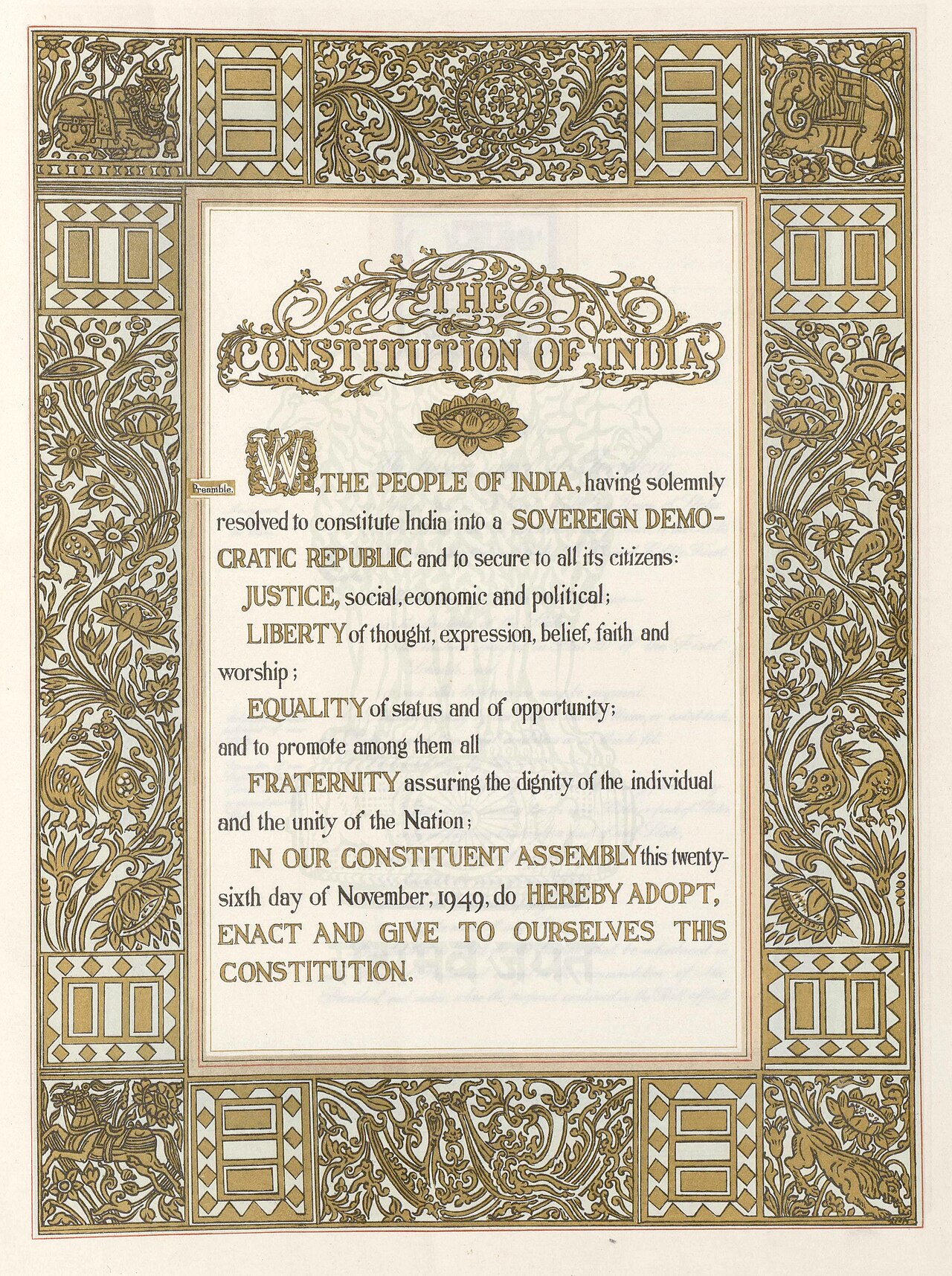
The Constitution of India isn't just a piece of paper; it's the bedrock of the world's largest democracy, a sprawling legal tome that defines the very essence of Indian governance. Enacted on January 26, 1950, it's the longest written national constitution globally, a testament to the complexity and ambition of nation-building. It meticulously outlines the powers and functions of every branch of government – the executive, legislature, and judiciary – while simultaneously enshrining the fundamental rights and duties of every Indian citizen. Think of it as the ultimate rulebook, ensuring that power is distributed, rights are protected, and the nation progresses according to a defined legal and ethical framework. Understanding its core tenets is crucial for anyone seeking to grasp the mechanics of India's political and social fabric.
📍 Where to Find It (Digitally & Physically)
Accessing the Constitution of India is remarkably straightforward, reflecting its status as a public document. The official, most current version is readily available online through the National Portal of India and the Ministry of Law and Justice website. For those who prefer a tangible copy, printed versions are widely sold in bookstores across India, particularly in major cities like Delhi and Mumbai. Many government publications departments also offer official print editions. Public libraries and university law departments are excellent places to consult physical copies, often with annotated versions that provide valuable context and judicial interpretations. Its accessibility ensures that citizens, scholars, and legal professionals alike can engage with its text.
⚖️ Who Needs to Know About It?
This document is essential for virtually every Indian citizen, regardless of their background. For politicians and policymakers, it's the ultimate guide for legislative action and governance. For legal professionals – lawyers, judges, and law students – it's the primary source of legal interpretation and precedent. For academics and researchers in fields like political science, sociology, and history, it's a critical object of study. Even for the average citizen, understanding their fundamental rights and duties, as outlined in the Constitution, is empowering. It forms the basis for civic engagement, protest, and participation in the democratic process, making it relevant to anyone living within or studying India.
✨ The Vibe: A Living Document
The label 'living document' isn't mere rhetoric; it's the Constitution's defining characteristic and a major contributor to its high Vibe Score of 85/100 for cultural resonance. Unlike static legal texts, the Indian Constitution is designed to evolve. Its provisions are interpreted by the judiciary, particularly the Supreme Court, in light of changing societal norms and emerging challenges. This dynamic interpretation, coupled with the amendment process, ensures its continued relevance. The debates surrounding its application, the constant legal challenges, and the public discourse it generates all contribute to its vibrant, evolving nature. It's a document that breathes with the nation it governs, constantly being re-examined and re-applied.
🤔 Key Features & What They Mean
At its heart, the Constitution is a masterpiece of balancing competing interests. The Fundamental Rights chapter (Part III) guarantees freedoms like speech, religion, and equality, acting as a bulwark against state overreach. Conversely, the Directive Principles of State Policy (Part IV) lay out aspirational goals for the government, guiding socio-economic reform. The concept of Secularism is woven throughout, ensuring religious freedom and equality for all faiths. The Preamble itself, with its powerful declaration of justice, liberty, equality, and fraternity, sets the moral compass. The intricate federal structure, balancing power between the Union and the States, is another critical element, designed to manage diversity across a vast subcontinent.
⚡️ Amendments: The Engine of Change
The mechanism for amending the Constitution is a critical aspect of its 'living' nature, though it's a process fraught with political tension, placing it high on the Controversy Spectrum. Article 368 provides the framework, allowing for changes to be made, but with varying degrees of difficulty depending on the nature of the amendment. Some parts can be amended by a simple majority in Parliament, while others require a special majority, and certain fundamental aspects necessitate ratification by at least half of the state legislatures. This tiered approach reflects a deliberate design to protect core principles while allowing for necessary adaptations. The frequency and nature of amendments, from the First Amendment in 1951 to more recent changes, highlight its ongoing evolution and the political battles fought over its interpretation and modification.
🆚 How It Stacks Up
Compared to other national constitutions, India's stands out for its sheer length and comprehensiveness. The U.S. Constitution, for instance, is remarkably concise and has seen far fewer amendments. The French Constitution also offers a different model, with a strong emphasis on executive power. What distinguishes the Indian Constitution is its detailed enumeration of rights, directive principles, and its attempt to address the specific historical and social context of India, including affirmative action policies. Its judicial review powers, vested in the Supreme Court, are robust, allowing for significant judicial shaping of constitutional meaning, a feature that has led to extensive judicial activism.
💡 Practical Tips for Engagement
Engaging with the Constitution requires a proactive approach. Start by reading the Preamble and the Fundamental Rights to grasp the core values and citizen entitlements. Familiarize yourself with the structure of government as defined within its articles. For deeper understanding, consult annotated versions or commentaries by legal scholars like Granville Austin or H.M. Seervai. Following landmark Supreme Court judgments, such as the Kesavananda Bharati case which established the 'basic structure doctrine', is crucial for understanding how the Constitution is applied in practice. Attend public lectures or join study groups focused on constitutional law and governance to foster a deeper appreciation of its complexities and ongoing relevance.
🚀 Getting Started with the Constitution
To begin your journey with the Indian Constitution, the most direct route is to access its text. Visit the official website of the Ministry of Law and Justice or the National Portal of India for the latest, authoritative version. For those interested in the historical context, explore resources detailing the Constituent Assembly debates. If you're a student or researcher, your local university library will likely have comprehensive collections. Consider subscribing to legal journals or following reputable news sources that cover constitutional law and governance. The journey into understanding this foundational document is an ongoing one, rich with discovery and critical insight into the workings of Indian democracy.
Key Facts
- Year
- 1950
- Origin
- India
- Category
- Political Science / Law / History
- Type
- Legal Document / National Framework
Frequently Asked Questions
Is the Indian Constitution the longest in the world?
Yes, the Constitution of India is widely recognized as the longest written national constitution currently in force. Its extensive nature covers a vast array of governmental structures, citizen rights, and duties, reflecting the complex socio-political landscape it was designed to govern. This comprehensiveness contributes to its 'living document' status, as it attempts to address a multitude of potential issues within its text.
Can the Indian Constitution be amended?
Absolutely. Article 368 of the Constitution provides the mechanism for amendments. However, the process varies in difficulty depending on the part of the Constitution being amended. Some sections require a simple majority in Parliament, while others necessitate a special majority, and certain fundamental aspects require ratification by state legislatures. This ensures that core principles are protected while allowing for necessary adaptations.
What are Fundamental Rights and Directive Principles?
Fundamental Rights (Part III) are justiciable rights guaranteed to all citizens, such as the right to equality, freedom of speech, and freedom of religion, which can be enforced by the courts. Directive Principles of State Policy (Part IV) are non-justiciable guidelines for the government, outlining socio-economic goals like ensuring adequate livelihood and promoting public health. While not enforceable in courts, they are considered fundamental to the governance of the country.
Who drafted the Indian Constitution?
The Constitution was primarily drafted by the Constituent Assembly, a body elected for this purpose. Dr. B.R. Ambedkar is widely regarded as the chief architect and played a pivotal role as the chairman of the Drafting Committee. Other key figures included Jawaharlal Nehru, Sardar Vallabhbhai Patel, and Dr. Rajendra Prasad, among many others who contributed to its deliberations.
What does 'living document' mean in the context of the Indian Constitution?
The term 'living document' signifies that the Constitution is not static but evolves over time. This evolution occurs through judicial interpretation by courts, especially the Supreme Court, which adapts its principles to contemporary issues, and through the amendment process. This dynamic nature ensures its continued relevance in a changing society, allowing it to address new challenges and reflect evolving national values.
Where can I find the official text of the Indian Constitution?
The most authoritative and up-to-date version of the Constitution of India is available online through official government portals. Key sources include the National Portal of India and the website of the Ministry of Law and Justice. Printed copies are also widely available for purchase in bookstores across India.