
Contents
Overview
The understanding of hyperpituitarism is intrinsically linked to the discovery and study of the pituitary gland itself. Early observations of individuals with abnormal growth patterns, such as gigantism and acromegaly, hinted at a central regulatory mechanism gone awry. Advancements in histopathology and later, immunohistochemistry, allowed for precise classification of tumor types and their corresponding hormonal overproduction. This historical progression from clinical observation to molecular understanding marks the journey of deciphering hyperpituitarism.
⚙️ How It Works
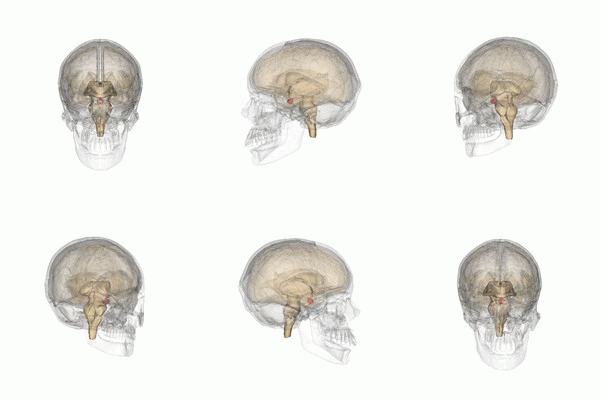
The pituitary gland is a small but mighty organ nestled at the base of the brain. Prolactinomas are the most frequent type of pituitary adenoma. Excess hormones can also compress surrounding pituitary tissue or cranial nerves, leading to secondary deficiencies or neurological symptoms like visual disturbances.
📊 Key Facts & Numbers
Surgical resection is the primary treatment for many pituitary adenomas.
👥 Key People & Organizations
The development of effective treatments, particularly somatostatin analogs like octreotide and lanreotide, has allowed many individuals to manage their condition.
🌍 Cultural Impact & Influence
Culturally, hyperpituitarism has manifested in the fascination with individuals exhibiting extreme physical characteristics, often depicted in historical accounts and, more recently, in popular media. The stories of individuals with gigantism and acromegaly have sometimes been sensationalized, highlighting societal perceptions of 'the abnormal.' However, the medical understanding has shifted towards recognizing these as complex endocrine conditions requiring compassionate care. The development of effective treatments, particularly somatostatin analogs like octreotide and lanreotide, has allowed many individuals to manage their condition and lead more typical lives, reducing the dramatic physical manifestations previously associated with untreated hyperpituitarism.
⚡ Current State & Latest Developments
Current research is intensely focused on refining diagnostic tools and developing more targeted therapies. Advances in magnetic resonance imaging (MRI) allow for earlier and more precise detection of pituitary adenomas. The development of novel drug therapies, including oral somatostatin receptor antagonists and dopamine agonists, offers improved patient compliance and efficacy. Furthermore, ongoing studies are exploring the genetic underpinnings of pituitary adenomas, aiming to identify predispositions and potentially develop preventative strategies. The integration of artificial intelligence in analyzing imaging data and predicting treatment responses is also an emerging frontier in the field.
🤔 Controversies & Debates
A significant debate revolves around the optimal management strategy for non-functioning pituitary adenomas that are discovered incidentally (incidentalomas). The threshold for intervention versus active surveillance for incidentalomas remains a point of discussion among neurosurgeons and endocrinologists. The role of genetics in predicting tumor behavior and response to therapy is also an active area of research and debate.
🔮 Future Outlook & Predictions
We can anticipate the development of even more specific targeted therapies that minimize side effects while maximizing hormone suppression. Minimally invasive surgical techniques, such as endoscopic transnasal approaches, are becoming more prevalent.
💡 Practical Applications
The primary practical application of understanding hyperpituitarism is in the diagnosis and management of specific endocrine disorders. For acromegaly, treatments aim to normalize growth hormone levels through surgery, medication (e.g., octreotide, pegvisomant), or radiation therapy. For prolactinomas, dopamine agonists like bromocriptine and cabergoline are highly effective in shrinking tumors and normalizing prolactin levels. For Cushing's disease, treatment focuses on reducing cortisol production, often involving surgery to remove the pituitary adenoma, followed by medical therapy if needed. Early and accurate diagnosis through hormone testing and imaging studies is paramount for successful outcomes.
Key Facts
- Category
- science
- Type
- topic