
Contents
Overview
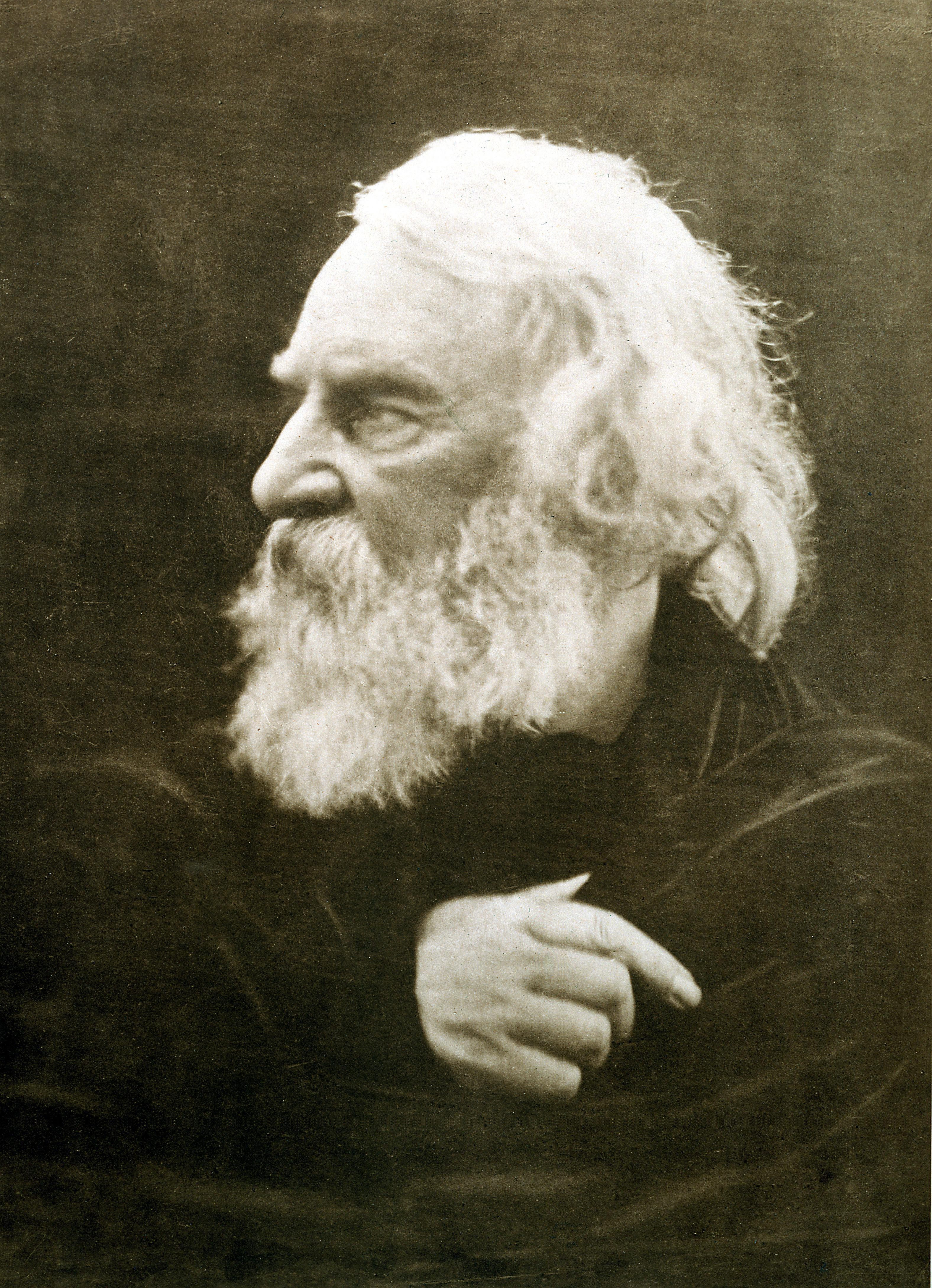
Born on February 27, 1807, in Portland, then part of Massachusetts, Henry Wadsworth Longfellow hailed from a distinguished New England family. His father, Stephen Longfellow, was a lawyer and a congressman, while his mother, Zilpah Wadsworth, traced her lineage to John Alden and Priscilla Alden of the Mayflower pilgrims. This rich historical tapestry undoubtedly informed his later poetic explorations of American heritage. Longfellow entered Bowdoin College at the remarkably young age of 14, graduating in 1825. His academic prowess and early literary talent were evident, leading to his appointment as a professor of modern languages at Bowdoin. A subsequent period of study in Europe, from 1826 to 1829, exposed him to continental literature and solidified his linguistic skills, preparing him for his prolific career.
⚙️ The Craft of Verse
Longfellow's poetic engine ran on narrative momentum and accessible language, a deliberate departure from the more esoteric styles favored by some contemporaries. He mastered the art of the ballad and the epic, employing meters and rhyme schemes that lent themselves to recitation and memorization. His translations, particularly of Dante's Divine Comedy, were monumental undertakings, requiring not only linguistic precision but also a deep understanding of poetic form to render the Italian masterpiece into English. This meticulous approach, combined with his innate storytelling ability, allowed him to craft poems that felt both grand and intimately familiar, making complex themes digestible for a wide readership. His use of vivid imagery and memorable refrains, as seen in "The Village Blacksmith," cemented his poems in the public imagination.
📊 Key Facts & Numbers
Longfellow's prolific output resulted in over 30 volumes of poetry and prose. His most famous collection, Voices of the Night (1839), sold an astonishing 10,000 copies within its first year, a remarkable feat for the time. "The Song of Hiawatha" (1855) achieved immediate international acclaim, selling 4,000 copies on its first day of release in Boston alone. By the mid-19th century, Longfellow was arguably the most famous American poet globally, with his works translated into at least 10 languages. His poems were recited in schools across the nation, contributing to an estimated readership of millions by the 1870s. He received honorary degrees from institutions like Oxford University and Cambridge University in England, underscoring his international stature.
👥 Key People & Organizations
Beyond his immediate family, including his wives Mary Storer Potter and Frances Appleton, and his six children like Alice Mary Longfellow and Ernest Wadsworth Longfellow, Longfellow's professional circle was influential. He was a close friend of Nathaniel Hawthorne, another giant of American literature, and a colleague to many prominent intellectuals at Harvard University. His academic appointments placed him at the center of American intellectual life. He was also recognized by prestigious European societies, receiving the Pour le Mérite order for Sciences and Arts from Prussia in 1869, a testament to his esteemed position among global cultural figures.
🌍 Cultural Impact & Influence
Longfellow's influence on American culture is profound and multifaceted. His poems provided a shared narrative for a young nation, offering heroic tales of colonial and revolutionary figures like Paul Revere and romanticized depictions of indigenous life in "The Song of Hiawatha." These works became integral to the American educational curriculum, shaping generations' understanding of their national identity and history. His ability to capture the American spirit, often through accessible and emotionally resonant verse, made him a national bard. His popularity extended to Europe, where he was often seen as the quintessential American literary voice, bridging the cultural gap between the Old World and the New.
⚡ Later Life & Legacy
Longfellow retired from his professorship at Harvard University in 1854 to dedicate himself fully to writing. He spent his later years in the historic former headquarters of George Washington in Cambridge, a home that became a pilgrimage site for admirers. Despite suffering personal tragedies, including the deaths of both his wives—Mary in 1835 and Frances in a tragic fire in 1861—he continued to write and revise, producing works like The Masque of Pandora (1875). He passed away on March 24, 1882, leaving behind a literary legacy that had profoundly shaped American letters and identity. His home in Cambridge is now a museum, preserving his life and work.
🤔 Controversies & Debates
Despite his immense popularity during his lifetime, Longfellow's critical reputation waned in the 20th century. Critics, particularly those associated with modernist movements, began to find his verse sentimental, didactic, and overly conventional. The perceived simplicity of his language and themes led to him being labeled as a "fireside poet" whose work was too domestic and moralistic for a more complex era. Debates arose over the historical accuracy of poems like "Paul Revere's Ride," and the romanticized portrayal of Native Americans in "The Song of Hiawatha" drew criticism for its inaccuracies and appropriation of indigenous lore. This critical reassessment led to a period where his work was often dismissed as mere children's verse, a stark contrast to his earlier global acclaim.
🔮 Enduring Resonance
The 21st century has seen a re-evaluation of Longfellow's contributions, moving beyond the simplistic criticisms of the past. While acknowledging the stylistic limitations perceived by some, scholars and readers are increasingly recognizing the enduring power of his narrative craft and his role in forging an American literary identity. His ability to connect with a broad audience through accessible storytelling and universal themes of love, loss, heroism, and nature continues to resonate. Furthermore, his work provides invaluable insight into the cultural and historical sensibilities of 19th-century America, making him a crucial figure for understanding the nation's literary evolution. The ongoing preservation of his home and the continued presence of his poems in educational contexts suggest a lasting, albeit perhaps more nuanced, place in the literary canon.
💡 Educational Significance
Longfellow's primary significance lies in his role as an educator and popularizer of literature. His professorships at Bowdoin College and Harvard University directly influenced generations of students. Beyond the classroom, his poems served as a form of public education, disseminating historical narratives and moral lessons across the nation. His translations also made significant European literary works accessible to an American audience, fostering a broader cultural dialogue. The accessibility and memorability of his verse made poetry a more widespread and appreciated art form, encouraging literacy and a love for reading among the general populace, particularly through his widely adopted poems in school curricula.
Key Facts
- Year
- 1807-1882
- Origin
- United States
- Category
- culture
- Type
- person
Frequently Asked Questions
What are Henry Wadsworth Longfellow's most famous poems?
Longfellow is most renowned for his narrative poems, particularly "Paul Revere's Ride," which immortalized the midnight alarm during the American Revolutionary War. Other widely celebrated works include "The Song of Hiawatha," an epic inspired by indigenous legends, and "Evangeline," a tragic romance set during the Acadian expulsion. His shorter, more lyrical poems like "The Village Blacksmith" and "A Psalm of Life" also achieved immense popularity and became staples in American education.
Why was Longfellow so popular in his time?
Longfellow's popularity stemmed from his accessible language, engaging narratives, and themes that resonated with the burgeoning American identity. He tapped into a national consciousness eager for its own myths and heroes, presenting them in a clear, often musical, verse that was easily understood and recited. His works offered moral instruction and patriotic sentiment, making them ideal for home and school, and his international fame as an American literary ambassador further amplified his renown.
What is the significance of the 'Fireside Poets'?
The 'Fireside Poets,' a group that included Longfellow, William Cullen Bryant, John Greenleaf Whittier, James Russell Lowell, and Oliver Wendell Holmes Sr., were the first American poets to achieve widespread popularity comparable to British poets. They were known for writing accessible, often domestic or patriotic, verse suitable for recitation by the fireside. Longfellow, with his immense international fame and prolific output, was arguably the most prominent member, setting a standard for literary success in the United States during the 19th century.
How did Longfellow's personal tragedies affect his writing?
Longfellow endured profound personal losses, notably the deaths of both his wives. The loss of his first wife, Mary Storer Potter, in 1835, and the horrific accidental death of his second wife, Frances Appleton, in 1861, cast long shadows over his life and work. While he continued to write prolifically, themes of grief, memory, and the ephemeral nature of life became more pronounced in his later poetry, adding a layer of somber reflection to his oeuvre.
Why did critical opinion of Longfellow change so drastically?
In the early 20th century, literary tastes shifted dramatically with the rise of modernist movements that favored experimental forms, psychological depth, and a rejection of overt sentimentality. Critics like Ezra Pound and T.S. Eliot championed poets who embraced these new aesthetics, often dismissing the more traditional, narrative, and morally didactic verse of Longfellow and the Fireside Poets as outdated or overly sentimental. This critical re-evaluation led to Longfellow's work being marginalized for decades, though recent scholarship has begun to re-examine his contributions with a more balanced perspective.
What is the historical accuracy of 'Paul Revere's Ride'?
While "Paul Revere's Ride" is a powerful and iconic poem, its historical accuracy is debated. Longfellow took significant poetic license, most notably in depicting Paul Revere as the sole rider and the primary alarm-giver. In reality, Revere was one of several riders, and his mission was to alert William Dawes and Samuel Prescott to the British troop movements. The poem also dramatizes the events for poetic effect, but its enduring power lies in its ability to capture the spirit of revolutionary defiance, making it a foundational piece of American folklore.
Where can one visit Henry Wadsworth Longfellow's home?
Henry Wadsworth Longfellow's final residence, the Longfellow House–Washington's Headquarters National Historic Site, is preserved as a museum in Cambridge. This historic house, where he lived for nearly 40 years and wrote many of his most famous works, served as George Washington's headquarters during the Siege of Boston in 1775-1776. It offers visitors a tangible connection to his life, work, and the historical milieu in which he lived.