
Contents
- 🎵 Origins & History
- ⚙️ How It Works
- 📊 Key Facts & Numbers
- 👥 Key People & Organizations
- 🌍 Cultural Impact & Influence
- ⚡ Current State & Latest Developments
- 🤔 Controversies & Debates
- 🔮 Future Outlook & Predictions
- 💡 Practical Applications
- 📚 Related Topics & Deeper Reading
- Frequently Asked Questions
- References
- Related Topics
Overview
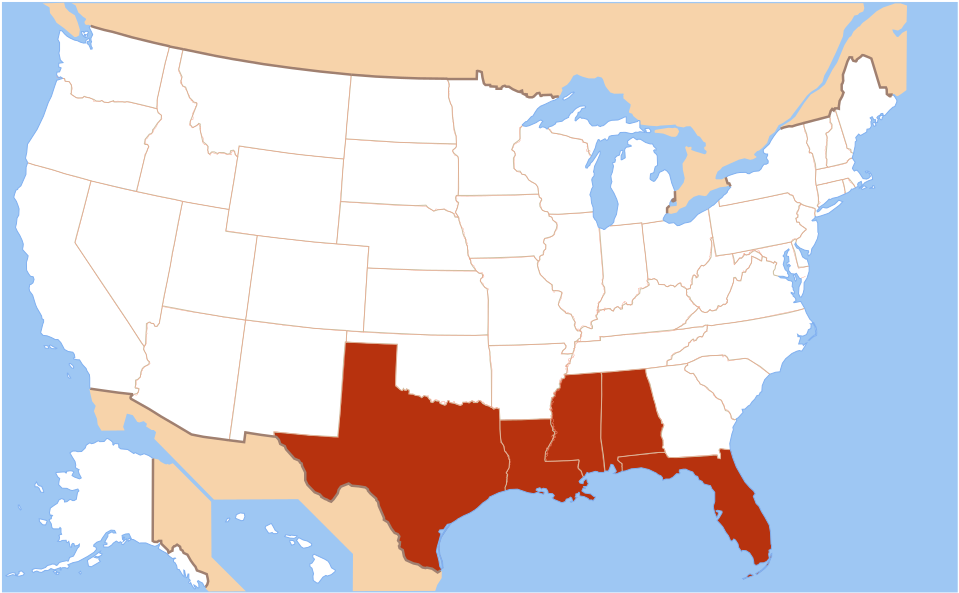
The concept of the 'Gulf Coast' as a distinct region coalesces from the shared geography and subsequent historical development of the American states bordering the Gulf of Mexico. While indigenous peoples like the Caddo and Choctaw inhabited these lands for millennia, European colonization, beginning with the Spanish in the 16th century, fundamentally reshaped the area. The establishment of port cities like New Orleans (founded 1718) by the French and later American expansion solidified the interconnectedness of these coastal territories. The 19th century saw the rise of cotton plantations and the critical port of Galveston, further cementing the region's economic identity. Post-Civil War, the discovery of oil in Texas at the Spindletop gusher in 1901 and the subsequent development of the petrochemical industry in places like Baton Rouge and Houston transformed the Gulf Coast into a global energy hub, a legacy that continues to define its trajectory.
⚙️ How It Works
The Gulf Coast functions as a dynamic interface between continental North America and the Gulf of Mexico, a semi-enclosed sea that significantly influences its climate, ecology, and economy. Its geography is characterized by extensive coastlines, barrier islands, bays, estuaries, and bayous, particularly prominent in Louisiana. This intricate network of waterways facilitates transportation and supports rich biodiversity, crucial for the region's fishing and tourism industries. Economically, the region operates as a critical node in global supply chains, particularly for energy. The extensive network of pipelines, refineries, and shipping ports, such as the Port of Houston and the Port of New Orleans, are the arteries through which oil, natural gas, and manufactured goods flow. The region's vulnerability to tropical cyclones, however, necessitates robust infrastructure and emergency management systems, a constant operational challenge.
📊 Key Facts & Numbers
Stretching over 1,600 miles, the Gulf Coast is home to over 50 million people. The energy sector is colossal, with the Gulf of Mexico accounting for approximately 17% of the United States' crude oil production and 5% of its natural gas production, according to the U.S. Energy Information Administration (EIA). The petrochemical industry here is the largest in the nation, with over 40% of U.S. petrochemical production capacity located along the coast. Fishing yields are substantial, with Louisiana alone often ranking first nationally in commercial fishing landings by volume. The region also faces significant environmental challenges; the Mississippi River Delta, for instance, has lost an estimated 2,000 square miles of land since the 1930s, a rate of nearly 17 square miles per year, largely due to human intervention and rising sea levels. The economic impact of hurricanes can be devastating, with Hurricane Katrina in 2005 causing an estimated $125 billion in damages.
👥 Key People & Organizations
Key figures shaping the Gulf Coast's narrative are numerous. Stephen F. Austin, the 'Father of Texas,' played a pivotal role in American settlement of the region. Jean-Baptiste Le Moyne de Bienville, founder of New Orleans, established a crucial colonial outpost. In the realm of energy, figures like George P. Mitchell revolutionized natural gas extraction through hydraulic fracturing. Organizations such as the Gulf Coast Oil & Gas Association advocate for the energy sector, while environmental groups like the Gulf Restoration Network work to protect its fragile ecosystems. Major corporations like ExxonMobil, Shell, and Dow have massive operational footprints, influencing local economies and politics. The National Hurricane Center in Miami, Florida, is critical for forecasting and warning the region about tropical cyclones.
🌍 Cultural Impact & Influence
The Gulf Coast boasts a unique cultural fusion, a vibrant blend of Southern, Creole, Cajun, Hispanic, and African American influences. This is most famously expressed in the music of New Orleans, the birthplace of jazz, and the distinct culinary traditions of Cajun and Creole food. The region's music scene, encompassing genres from blues and zydeco to country and rock and roll, has had a profound impact on American popular culture. Its distinctive dialect, architecture, and festivals, such as Mardi Gras in New Orleans and Galveston's Mardi Gras! Galveston, are globally recognized cultural touchstones. The visual arts also reflect the region's character, from the maritime art of coastal Florida to the vibrant street art found in urban centers.
⚡ Current State & Latest Developments
The Gulf Coast in 2024 continues to grapple with the dual pressures of economic development and environmental sustainability. The energy sector remains dominant, with ongoing debates about offshore drilling leases and the transition to renewable energy sources. Coastal communities are increasingly investing in resilience measures against rising sea levels and more intense storm seasons, spurred by recent events like Hurricane Ida (2021) and Hurricane Ian (2022). Significant infrastructure projects, including coastal barrier systems and port expansions, are underway in states like Louisiana and Texas. The region is also experiencing demographic shifts, with continued population growth in major metropolitan areas like Houston and Tampa Bay, alongside the persistent challenge of population displacement due to environmental factors.
🤔 Controversies & Debates
The Gulf Coast is a focal point for several significant controversies. The most persistent debate revolves around the environmental impact of the energy industry, particularly offshore drilling and the associated risks of oil spills, such as the Deepwater Horizon oil spill in 2010. Coastal erosion and land loss, exacerbated by levee systems designed to protect urban centers like New Orleans but which starve the delta of sediment, are critical issues. Debates also surround the economic trade-offs between industrial development and ecological preservation, especially concerning the health of fisheries and wetlands. Furthermore, the region's vulnerability to increasingly severe hurricanes raises questions about urban planning, disaster preparedness, and the equitable distribution of resources for recovery and adaptation.
🔮 Future Outlook & Predictions
The future of the Gulf Coast will likely be defined by its response to climate change and the global energy transition. Expect continued investment in coastal resilience infrastructure, potentially including large-scale projects like the Ike Dike in Texas. The shift towards renewable energy sources, such as offshore wind and solar power, will gain momentum, though the dominance of the fossil fuel industry will persist for decades. Demographic trends suggest continued population growth in coastal cities, intensifying pressures on infrastructure and resources. The region's unique cultural heritage will likely remain a powerful draw, but its preservation will depend on effective environmental stewardship and community adaptation strategies. The ongoing challenge will be balancing economic prosperity with ecological integrity in an increasingly unpredictable climate.
💡 Practical Applications
The Gulf Coast's practical applications are vast, primarily centered around its role as a global energy hub and a critical transportation corridor. Its extensive network of ports, such as the Port of Corpus Christi and the Port of Tampa, are vital for international trade, handling billions of dollars in cargo annually. The petrochemical industry here produces essential materials for countless consumer goods, from plastics to fertilizers. The region's rich marine ecosystems support significant commercial and recreational fishing industries. Furthermore, its beaches and coastal attractions are major drivers of tourism, supporting hospitality and service sectors. The Gulf Coast also plays a crucial role in aerospace, with facilities like NASA's John F. Kennedy Space Center in Florida contributing to space exploration.
Key Facts
- Year
- Ongoing
- Origin
- United States
- Category
- place
- Type
- place
Frequently Asked Questions
What are the main economic drivers of the U.S. Gulf Coast?
The U.S. Gulf Coast's economy is primarily driven by the energy sector, including oil and natural gas extraction and refining, as well as a massive petrochemical industry. Fishing, agriculture, aerospace, and tourism are also significant contributors. Major ports facilitate extensive international trade, making it a critical logistical hub for the United States. The region's economic output is heavily influenced by global commodity prices and the demand for energy products.
How do hurricanes impact the Gulf Coast?
Hurricanes pose a significant and recurring threat to the Gulf Coast, causing widespread destruction, loss of life, and immense economic damage. Storms like Hurricane Katrina (2005) and Hurricane Harvey (2017) have demonstrated the devastating power of these natural disasters, leading to billions of dollars in damages and long-term recovery challenges. The frequency and intensity of these storms are a major concern for coastal communities, driving investments in preparedness and resilience measures.
What is the cultural significance of the Gulf Coast?
The Gulf Coast is renowned for its unique cultural mosaic, a rich blend of Southern, Creole, Cajun, Hispanic, and African American traditions. This is most evident in its world-famous music genres like jazz and blues, its distinctive Cajun and Creole culinary heritage, and vibrant festivals such as Mardi Gras. The region's cultural identity is deeply intertwined with its history, geography, and the diverse populations that have settled there over centuries.
What are the major environmental challenges facing the Gulf Coast?
The Gulf Coast faces severe environmental challenges, including significant coastal erosion and land loss, particularly in Louisiana's delta region, which is exacerbated by rising sea levels and human intervention in natural processes. The region is also highly susceptible to pollution from industrial activities, notably oil spills like the Deepwater Horizon oil spill. The health of its vital wetlands and marine ecosystems is under constant threat from both industrial impacts and the effects of climate change.
How is the Gulf Coast adapting to climate change?
Adaptation to climate change on the Gulf Coast involves a multi-pronged approach. This includes significant investment in coastal protection infrastructure, such as seawalls, levees, and marsh restoration projects, aimed at mitigating storm surge and erosion. Communities are also re-evaluating development in vulnerable areas and implementing stricter building codes. Furthermore, there's a growing emphasis on transitioning towards renewable energy sources and developing more sustainable economic practices to reduce the region's carbon footprint and enhance its long-term resilience.
What are the key ports on the U.S. Gulf Coast?
The U.S. Gulf Coast is home to several of the nation's busiest and most important ports. Key among them are the Port of Houston, the Port of New Orleans, the Port of Corpus Christi, the Port of Beaumont, and the Port of Tampa. These ports handle a massive volume of cargo, including crude oil, refined products, chemicals, agricultural goods, and manufactured items, playing a critical role in both domestic and international trade.
What is the significance of the Deepwater Horizon oil spill?
The Deepwater Horizon oil spill in 2010 was the largest accidental marine oil spill in history, releasing an estimated 4.9 million barrels of crude oil into the Gulf of Mexico. It had catastrophic environmental consequences, severely impacting marine life, coastal ecosystems, and the fishing and tourism industries across the Gulf Coast. The spill led to extensive legal battles, significant fines for BP, and a renewed focus on offshore drilling safety regulations and environmental accountability.