
Contents
- 🏛️ What is the GNA, Really?
- 🗺️ Where Does the GNA Operate?
- ⏳ A Brief History: From Tripoli Agreement to Contested Legitimacy
- ⚖️ Key Institutions and Power Dynamics
- 🤝 International Recognition and Support
- 💥 Challenges and Criticisms: The GNA's Rocky Road
- 📈 Vibe Score & Controversy Spectrum
- 💡 Practical Implications for Observers
- ➡️ Getting Involved or Staying Informed
- Frequently Asked Questions
- Related Topics
Overview
The Government of National Accord (GNA) (GNA) was established in December 2015 under the Libyan Political Agreement (LPA) signed in Skhirat, Morocco. Its primary mandate was to unify Libya's fractured political landscape, end the civil war that erupted after the 2011 revolution, and pave the way for democratic elections. The GNA, led by Fayez al-Sarraj, was intended to serve as the sole legitimate executive authority for the entire country, overseeing security, economic, and administrative affairs. However, its actual reach and authority have been perpetually contested, making it a focal point of Libya's ongoing instability.
🗺️ Where Does the GNA Operate?
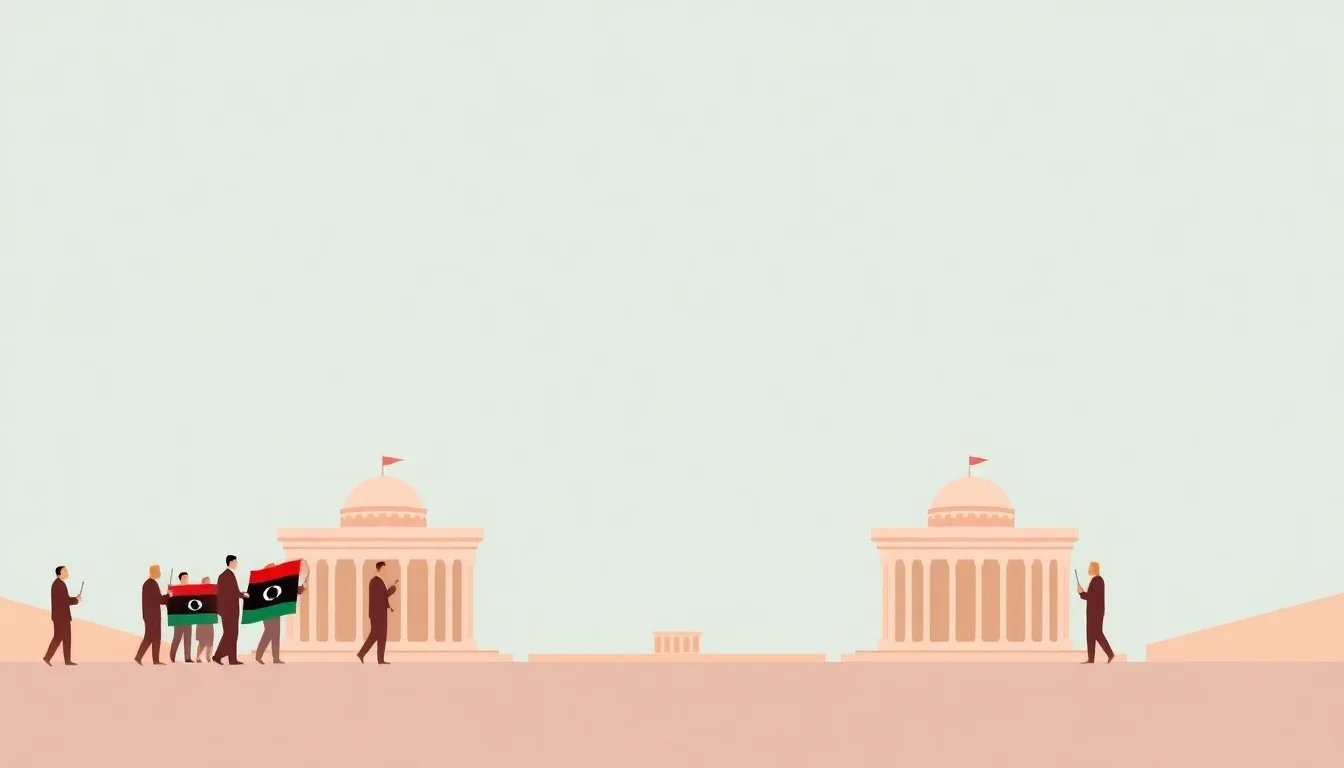
Geographically, the GNA's operational base was primarily Tripoli, the capital city. For much of its existence, its effective control extended to western Libya, including key coastal cities and the capital itself. However, rival governments and militias in the east and south, notably the House of Representatives and the Libyan National Army (LNA) led by Khalifa Haftar, challenged its writ. This territorial division meant that the GNA's governance was often limited to areas where it could secure loyalty and military backing, creating a fragmented state apparatus.
⏳ A Brief History: From Tripoli Agreement to Contested Legitimacy
The GNA's genesis lies in the desperate international effort to find a political solution to the chaos following the 2011 uprising. The LPA, brokered by the United Nations Support Mission in Libya (UNSMIL), aimed to create a unified government capable of restoring order. Fayez al-Sarraj was appointed as the Prime Minister, heading a Presidential Council. However, the LPA's legitimacy was immediately questioned by factions in eastern Libya, leading to a protracted power struggle and the GNA's inability to fully assert its authority across the nation.
⚖️ Key Institutions and Power Dynamics
The GNA's structure included a Presidential Council, a cabinet of ministers, and a High Council of State, which acted as a consultative body. The Presidential Council was meant to be the supreme decision-making body, but internal divisions and external pressures often hampered its effectiveness. The GNA's ability to control the military and security apparatus was a constant point of contention, with various militias and armed groups aligning with different political factions, undermining any centralized command structure.
🤝 International Recognition and Support
Internationally, the GNA garnered significant recognition, particularly from the United Nations and European Union member states, who saw it as the only legitimate government emerging from the LPA. This recognition translated into diplomatic support, financial assistance, and, at times, military aid, particularly from Turkey. However, this support was often counterbalanced by countries backing rival factions, such as Russia and France, which lent support to the LNA, creating a complex web of international intervention that further complicated Libya's internal politics.
💥 Challenges and Criticisms: The GNA's Rocky Road
The GNA faced relentless criticism regarding its effectiveness, its perceived inability to address the country's economic woes, and its failure to disarm militias or establish a unified security force. Allegations of corruption and mismanagement were rampant, eroding public trust. Furthermore, its legitimacy was constantly challenged by rival political entities and armed groups, most notably the LNA's offensive in 2019-2020 aimed at capturing Tripoli, which highlighted the GNA's precarious hold on power.
📈 Vibe Score & Controversy Spectrum
The GNA's Vibe Score hovers around a 45/100, reflecting its significant but ultimately unstable cultural energy. It represents a noble, albeit flawed, attempt at state-building in a deeply fractured environment. The Controversy Spectrum for the GNA is extremely high, with debates raging over its legitimacy, effectiveness, and the international actors who supported or opposed it. Its existence was a constant source of tension between competing Libyan factions and their foreign backers.
💡 Practical Implications for Observers
For anyone observing Libyan politics, understanding the GNA is crucial. It represents a key phase in the post-2011 political experiment, illustrating the immense difficulties in forging national unity amidst deep-seated divisions and external interference. Its successes, however limited, often involved securing international backing and maintaining a fragile hold on western Libya. Its failures underscore the persistent challenges of state-building in a country awash with arms and competing interests.
➡️ Getting Involved or Staying Informed
To stay informed about the GNA's legacy and the ongoing political developments in Libya, follow reports from UNSMIL and reputable news outlets covering the region. The GNA's role has largely been superseded by subsequent transitional governments, but its impact on the trajectory of Libyan politics remains a critical subject of study. Engaging with academic analyses and policy briefs from think tanks focused on North Africa will provide deeper context.
Key Facts
- Year
- 2015
- Origin
- Libyan Political Agreement (LPA)
- Category
- Geopolitics & Governance
- Type
- Governmental Body
Frequently Asked Questions
When was the Government of National Accord (GNA) established?
The GNA was established in December 2015 as a result of the Libyan Political Agreement (LPA) signed in Skhirat, Morocco. It was intended to unify Libya and transition the country towards stability and democratic governance after years of conflict.
Who was the leader of the GNA?
The GNA was led by Prime Minister Fayez al-Sarraj, who headed the Presidential Council. He was the internationally recognized face of the government based in Tripoli.
What was the GNA's primary goal?
The GNA's primary goal was to unify Libya's fragmented political and security landscape, end the civil war, and establish a legitimate, unified government capable of governing the entire country and preparing for democratic elections.
Did the GNA control all of Libya?
No, the GNA's control was largely confined to Tripoli and parts of western Libya. Rival governments and military forces, particularly in eastern Libya under the Libyan National Army (LNA), contested its authority and territorial reach.
What were the main criticisms leveled against the GNA?
The GNA faced significant criticism for its perceived ineffectiveness in unifying the country, addressing economic issues, and disarming militias. Allegations of corruption and mismanagement also undermined its public trust and legitimacy.
Which international bodies recognized the GNA?
The GNA received significant international recognition from the United Nations and many European Union member states. This recognition was crucial for its diplomatic standing, though it did not translate into uncontested authority on the ground.