
Contents
Overview
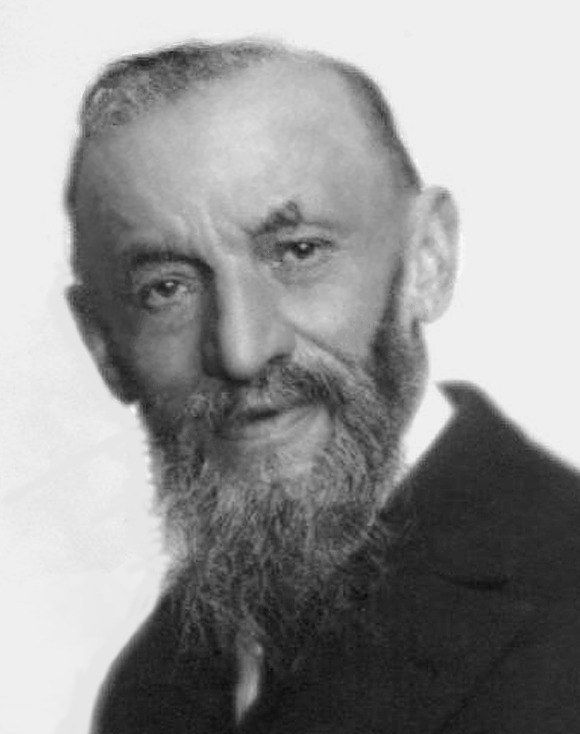
Giuseppe Peano's intellectual journey began in the Piedmont region of Italy, born in Spinetta, near Cuneo. His early education at the University of Turin set the stage for a career dedicated to the rigorous exploration of mathematical principles. Under the tutelage of figures like Enrico Delle Chiaie, Peano developed a profound appreciation for formal logic and axiomatic systems. He officially began his academic career at Turin, quickly distinguishing himself with his sharp intellect and prolific output. His early work focused on calculus and differential equations, but it was his foray into the foundations of mathematics that would cement his lasting fame, particularly his publication of the Peano axioms for the natural numbers, a cornerstone of modern mathematical logic.
⚙️ How It Works
Peano's most enduring contribution, the Peano axioms, provides a formal, axiomatic definition of the natural numbers (0, 1, 2, ...). These axioms establish the existence of a base element (zero), a successor function (which generates the next number), and crucial properties like the principle of mathematical induction. The axioms are typically stated as: 1) Zero is a natural number. 2) Every natural number has a successor, which is also a natural number. 3) Zero is not the successor of any natural number. 4) If the successors of two natural numbers are equal, then the numbers themselves are equal. 5) The principle of mathematical induction: If a property holds for zero, and if it holds for the successor of any natural number for which it holds, then it holds for all natural numbers. This formalization was revolutionary, providing a bedrock for arithmetic and logic that was free from intuitive assumptions.
📊 Key Facts & Numbers
Peano's prolific career yielded over 200 books and papers, a staggering output for any scholar. His seminal work, 'Arithmetices principia, nova methodo exposita', which introduced the Peano axioms, was published using his own invented logical notation, a precursor to modern symbolic logic. He was a staunch advocate for the use of formal logic in mathematics, contributing significantly to the development of set theory notation, including the symbols for union (∪) and intersection (∩). Beyond mathematics, Peano's linguistic project, Latino sine flexione, aimed to create a simplified, universally accessible language based on Latin, which he used extensively in his later publications, demonstrating his commitment to international communication and intellectual exchange.
👥 Key People & Organizations
While Peano was a singular force, his work was deeply intertwined with the intellectual currents of his time and the institutions he served. He spent the majority of his academic life teaching mathematics at the University of Turin, influencing generations of students. His logical notation was further developed and popularized by logicians such as Bertrand Russell and Alfred North Whitehead in their monumental work, 'Principia Mathematica'. Peano's linguistic efforts also garnered attention from international organizations, though his auxiliary language never achieved widespread adoption compared to Esperanto. His dedication to formal rigor was recognized with honors, including being appointed a Knight of the Order of the Crown of Italy.
🌍 Cultural Impact & Influence
The impact of Giuseppe Peano's work on mathematics and logic is immeasurable. The Peano axioms remain the standard definition for natural numbers, forming the basis for formal proofs and computational theory. His logical notation, though evolved, laid the groundwork for the symbolic languages used in computer science and artificial intelligence. The concept of mathematical induction, rigorously formalized by Peano, is a fundamental proof technique taught in every university mathematics program. Furthermore, his auxiliary language, Latino sine flexione, though not widely adopted, represented an early and influential attempt at creating a global auxiliary language, contributing to the broader discourse on international communication and linguistic standardization.
⚡ Current State & Latest Developments
In the 21st century, Giuseppe Peano's legacy continues to resonate, particularly within theoretical computer science and formal verification. The Peano axioms are directly implemented in theorem provers like Coq and Lean, which are used to formally verify the correctness of software and hardware systems, ensuring their reliability and security. Researchers continue to explore the philosophical implications of his work on the foundations of mathematics and the nature of mathematical objects. While Latino sine flexione itself is not widely spoken, the principles of linguistic simplification and international communication it embodied remain relevant in discussions about global languages and intercultural understanding.
🤔 Controversies & Debates
One of the primary debates surrounding Peano's work, particularly concerning his logical notation, was its initial complexity and departure from traditional mathematical exposition. Some contemporaries found his symbolic language cumbersome and overly abstract, preferring more intuitive, geometric approaches. While his Peano axioms are now universally accepted as foundational, early criticisms questioned whether they truly captured the intuitive essence of numbers or merely provided a formal, albeit sound, system. The adoption of his auxiliary language, Latino sine flexione, also faced competition and skepticism from established constructed languages like Esperanto, leading to debates about linguistic efficacy and practical adoption.
🔮 Future Outlook & Predictions
The future trajectory of Peano's influence is likely to remain strong, particularly in areas demanding absolute logical rigor. As computational systems become more complex and critical, the need for formal verification methods, deeply rooted in Peano's axiomatic approach, will only increase. We can anticipate further integration of Peano-inspired formalisms into advanced AI research, particularly in areas like knowledge representation and reasoning. The ongoing exploration of foundational mathematics will undoubtedly continue to revisit and build upon his axiomatic framework, potentially leading to new insights into the nature of mathematical truth and the limits of formal systems. His linguistic experiments may also see renewed interest as the world grapples with global communication challenges.
💡 Practical Applications
The practical applications of Giuseppe Peano's work are far-reaching, extending beyond pure mathematics. His formalization of natural numbers and mathematical induction is critical for computer science, underpinning the design and verification of algorithms and software. For instance, the correctness of sorting algorithms, cryptographic protocols, and operating system kernels is often proven using induction. His logical notation and set theory contributions are foundational to database theory and formal specification languages. In linguistics, while Latino sine flexione didn't become a global lingua franca, it influenced subsequent attempts at creating simplified international languages and highlighted the potential for linguistic engineering. His work on curves that fill space, known as Peano curves, also found applications in data compression and signal processing.
Key Facts
- Category
- science
- Type
- topic