
Contents
Overview
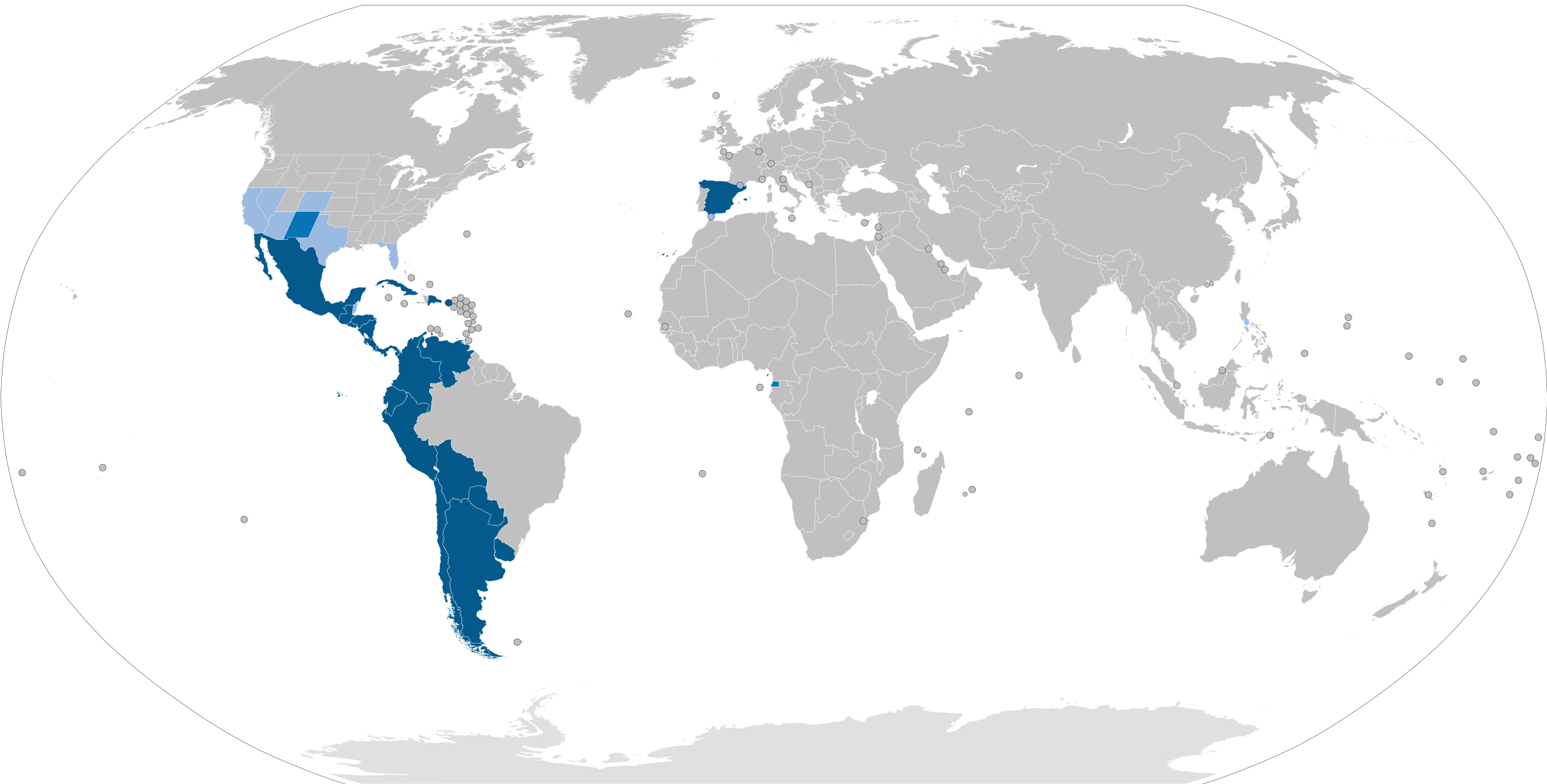
The story of Spanish's geographic spread is inextricably linked to the rise and fall of the Spanish Empire. Originating in the Castile region of the Iberian Peninsula, Spanish (then known as Castilian) began its global journey with the voyages of Christopher Columbus and the subsequent colonization of the Americas. By the 16th and 17th centuries, Spanish conquistadors and settlers had established dominance across vast territories, from Mexico and the Caribbean islands to much of South America and parts of North America. This imperial expansion wasn't limited to the Americas; Spanish influence also extended to Africa with territories like Equatorial Guinea, and briefly to Asia through the Philippines, which remained a Spanish colony for over 300 years. The legacy of this colonial past is the primary driver behind the language's current widespread distribution.
⚙️ How It Works
The 'how' of Spanish's distribution is a complex interplay of historical power dynamics, migration patterns, and cultural assimilation. During the colonial era, Spanish was imposed as the language of administration, religion, and commerce, often supplanting indigenous languages, though many indigenous linguistic influences remain in regional dialects. Post-colonial independence movements in Latin America solidified Spanish as the official language of the newly formed nations. In more recent times, significant migration from Spanish-speaking countries, particularly to the United States, has led to the growth of Spanish-speaking communities in non-traditional areas. Furthermore, globalization and the increasing economic ties between Spanish-speaking nations and the rest of the world have facilitated the spread of Spanish through business, education, and media, as seen with the global reach of Netflix and Spotify content in Spanish.
📊 Key Facts & Numbers
Spanish is the native language of approximately 496 million people, making it the second most spoken native language globally, trailing only Mandarin Chinese. An additional 74 million people speak Spanish as a second language, bringing the total number of speakers to around 570 million. Mexico alone accounts for a significant number of speakers, the largest national population. Colombia and Argentina follow with large populations of speakers, respectively. In Spain, the language's origin, there are a substantial number of speakers. The United States has the largest Spanish-speaking population outside of Latin America, with a significant number of native speakers and a total of over 62 million people who speak Spanish at home, according to the Pew Research Center. Equatorial Guinea in Africa has a notable number of speakers, and while Spanish is not official in the Philippines, an estimated 3 million people still speak it, a testament to its historical presence.
👥 Key People & Organizations
Key figures in the dissemination of Spanish include explorers like Christopher Columbus, who initiated the transatlantic expansion, and conquistadors such as Hernán Cortés and Francisco Pizarro, who established Spanish rule in vast territories. Literary giants like Miguel de Cervantes, author of Don Quixote, played a crucial role in standardizing and popularizing the language. Organizations like the Instituto Cervantes are dedicated to promoting Spanish language and culture worldwide. The Real Academia Española continues to be the primary authority on the standardization of the Spanish language, working in conjunction with academies in other Spanish-speaking countries.
🌍 Cultural Impact & Influence
The geographic distribution of Spanish has profoundly shaped global culture. It is the language of vibrant literary traditions, from the magical realism of Gabriel García Márquez. Spanish is also the language of iconic musical genres like salsa, tango, and reggaeton, which have achieved worldwide popularity. The influence is evident in global cuisine, art, and film, with Spanish-language cinema, particularly from Mexico and Spain, gaining international acclaim. The cultural output of the Hispanosphere, from the telenovelas of Televisa to the music of Shakira, permeates global media, demonstrating the language's enduring cultural power.
⚡ Current State & Latest Developments
The current state of Spanish distribution is marked by continued growth, particularly in the United States, where it is projected to become the most spoken language by mid-century. The Instituto Cervantes reports a steady increase in the number of students learning Spanish globally, driven by economic opportunities and cultural appeal. Digital platforms have also played a significant role; the proliferation of Spanish-language content on YouTube and TikTok has exposed millions to the language and its diverse dialects. However, challenges remain, including the ongoing endangerment of indigenous languages within Spanish-speaking countries and the need for continued linguistic standardization efforts across the diverse regions where Spanish is spoken, as highlighted by the work of the Association of Spanish Language Academies.
🤔 Controversies & Debates
Debates surrounding the geographic distribution of Spanish often center on linguistic purity versus regional variation. Critics sometimes argue that the influence of English, particularly in the Americas, is diluting the language, a concern often voiced by linguistic purists and bodies like the Real Academia Española. Conversely, linguists emphasize the natural evolution of language and celebrate the rich diversity of Spanish dialects, from the distinct pronunciation in Argentina (with its voseo) to the unique vocabulary found in Cuba. Another point of contention is the political and economic implications of Spanish's global reach, with discussions about its role in international diplomacy and trade, particularly in relation to English as a global lingua franca. The status of Spanish in the United States also sparks debate, with varying perspectives on its integration into American society.
🔮 Future Outlook & Predictions
The future outlook for Spanish is overwhelmingly positive, with projections indicating continued growth in speaker numbers. The United States is expected to become the largest Spanish-speaking country by population in the coming decades, significantly altering the linguistic landscape of North America. The increasing economic clout of Latin American nations, such as Brazil (though Portuguese-speaking, its proximity influences regional dynamics) and Mexico, will likely further elevate Spanish's global importance in business and diplomacy. The digital realm will continue to be a major driver, with more Spanish-language content being created and consumed globally. Efforts by organizations like FundéuRAE to promote clear and correct Spanish usage will be crucial in navigating this expansion and maintaining linguistic cohesion across its vast geographic spread.
💡 Practical Applications
Spanish finds practical application across numerous fields worldwide. In international business, fluency in Spanish is a significant asset for companies operating in or trading with Latin America and Spain, facilitating communication with over 570 million potential customers and partners. In diplomacy and international relations, Spanish is an official language of the United Nations, the European Union, and the Organization of American States, making it vital for global governance. In education, it is one of the most studied foreign languages, opening doors to academic and cultural exchange programs. Healthcare providers in areas with large Hispanic popul
Key Facts
- Category
- culture
- Type
- topic