
Contents
Overview
Eddie's genesis traces back to a papier-mâché mask created by the band's roadies for their stage backdrop in the late 1970s. The name 'Eddie' was reportedly inspired by a joke about the mask's skull-like appearance, with the phrase 'Eyes down, look in, it's Eddie, the mutant, the man who never was.' This raw, visceral stage prop laid the groundwork for his artistic transformation. The pivotal moment arrived when artist Derek Riggs was commissioned to create artwork for Iron Maiden's debut album. Riggs adapted the band's rough concept and the existing 'Eddie' persona into the now-legendary illustration that would define the band's visual identity for decades to come. The initial artwork featured Eddie with a menacing grin and a shock of hair, immediately resonating with fans, establishing him as the band's unofficial, undead frontman.
⚙️ Visual Evolution & Design
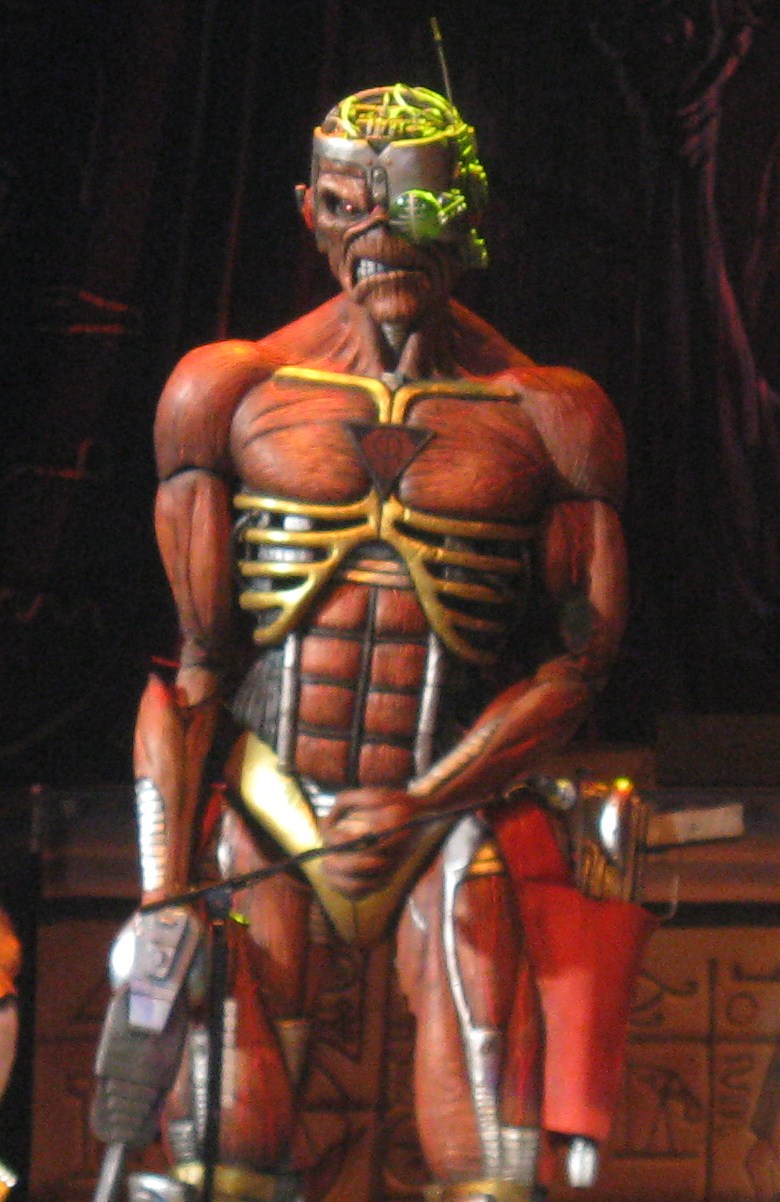
Eddie's design is characterized by its radical metamorphosis across Iron Maiden's discography, a testament to the band's commitment to thematic visual storytelling. Riggs established the initial template, but subsequent artists like Mel Chambers, Dave Baker, and Mark Wilkinson have each contributed to his diverse portrayals. He has appeared as a cyborg in 'The Number of the Beast' artwork, a mummy for 'Powerslave,' a lobotomized patient in 'Piece of Mind,' and a cloud-like entity in 'Virtual XI.' This visual fluidity allows Eddie to embody the specific narratives of each album and tour, from the historical and mythological to the futuristic and fantastical. His adaptability ensures he remains a fresh and compelling figure, constantly reinventing himself to match the band's evolving musical landscapes.
📊 Key Facts & Numbers
Eddie's presence is quantifiable across Iron Maiden's extensive career. Since his debut, he has appeared on numerous album and single covers. The band's merchandise featuring Eddie generates significant revenue. Live concerts, where Eddie often appears as a giant effigy or animatronic, are a core part of the Iron Maiden live experience, drawing hundreds of thousands of fans globally. The mobile game Iron Maiden: Legacy of the Beast continues to extend Eddie's reach. His likeness is also a key draw for the band's extensive fanbase.
👥 Key People & Organizations
The primary architects of Eddie's visual legacy are the band members of Iron Maiden themselves, particularly bassist and primary songwriter Steve Harris, who has consistently guided the band's artistic direction. Artist Derek Riggs is credited with the foundational design and early iconic depictions, including the artwork for Iron Maiden, 'Killers,' and 'The Number of the Beast.' Over the years, numerous other artists, including Mel Chambers, Dave Baker, and Mark Wilkinson, have contributed to Eddie's evolving imagery, each leaving their distinct mark. The band's management and record label, EMI Records (now Warner Music Group through acquisitions), have also played roles in disseminating Eddie's image globally through marketing and distribution channels.
🌍 Cultural Impact & Influence
Eddie has transcended his role as a mere mascot to become a potent symbol of heavy metal culture worldwide. His image is instantly recognizable to fans and non-fans alike, appearing on countless T-shirts, posters, and fan art, solidifying his status as a cultural icon. He has influenced the design of mascots and characters in other genres and media, demonstrating the broad appeal of his monstrous yet charismatic persona. The success of games like Ed Hunter and Iron Maiden: Legacy of the Beast showcases how Eddie's visual identity can be successfully translated into interactive entertainment, further embedding him in popular culture. His enduring presence has also inspired academic discussions on iconography and branding within the music industry.
⚡ Current State & Latest Developments
Eddie remains an active and vital component of Iron Maiden's identity. The band continues to feature him prominently in their live shows, most recently during their 'Future Past World Tour,' where he appeared in various forms, including a colossal animatronic. New merchandise featuring updated Eddie designs is consistently released, catering to both long-time fans and new generations discovering the band. The mobile game Iron Maiden: Legacy of the Beast continues to receive updates and new content, keeping Eddie relevant in the digital space. Discussions and speculation about Eddie's next visual incarnation for future album releases are a constant source of engagement among the fanbase.
🤔 Controversies & Debates
While Eddie is overwhelmingly celebrated, his monstrous and often violent imagery has occasionally drawn criticism. Some parents and conservative groups have expressed concern over his depictions, particularly those involving gore or perceived satanic themes, leading to occasional censorship or controversy in more conservative markets. However, Iron Maiden has consistently maintained that Eddie is a fictional character representing the fantasy and rebellion inherent in heavy metal, not a literal endorsement of violence or dark practices. The band's artistic freedom and Eddie's adaptability have largely insulated him from sustained backlash, with most critics and fans understanding his role as a theatrical element within the band's aesthetic.
🔮 Future Outlook & Predictions
The future of Eddie the Head appears as robust as his past. Given Iron Maiden's continued touring and recording activity, Eddie is almost certain to remain their visual standard-bearer. Future iterations will likely continue to reflect contemporary artistic trends and technological advancements, potentially incorporating more sophisticated CGI or interactive elements in live shows and digital media. The band's commitment to thematic album concepts suggests Eddie will continue to embody diverse characters and narratives, ensuring his visual relevance. There's also potential for further expansion into new gaming platforms or even animated series, leveraging his established global recognition and enduring appeal within the heavy metal community and beyond.
💡 Practical Applications
Eddie's primary application is as a powerful branding tool for Iron Maiden, enhancing their visual identity and merchandise sales. His likeness is utilized across a vast array of products, from clothing and accessories to collectibles and video games. In the realm of gaming, Eddie has been the central character in titles like Ed Hunter (1999) and Iron Maiden: Legacy of the Beast (2016), demonstrating his appeal as a playable protagonist. His image also serves as a visual anchor for the band's live performances, contributing to the immersive concert experience. Furthermore, Eddie's distinct aesthetic has influenced album art and character design in adjacent genres, serving as a benchmark for iconic visual representation in music.
Key Facts
- Category
- memes
- Type
- person