
Contents
Overview
The concept of democratic transition, while seemingly modern, echoes historical struggles for self-determination and representative governance. However, the systematic study of democratic transitions gained significant traction in the late 20th century, particularly following the 'third wave of democratization' identified by political scientist Samuel Huntington in his 1991 book, The Third Wave: Democratization in the Late Twentieth Century. This wave saw the collapse of authoritarian regimes in Southern Europe (e.g., Spain, Greece, Portugal) in the 1970s, followed by Latin America in the 1980s, and crucially, the fall of communism across Eastern Europe after the fall of the Berlin Wall in 1989. These historical precedents demonstrate that transitions are rarely linear, often involving periods of intense negotiation, popular mobilization, and sometimes, violent upheaval.
⚙️ How It Works
A democratic transition typically involves several interconnected phases and mechanisms. It often begins with a 'transition trigger,' such as a regime crisis, a military defeat, or widespread popular protest, leading to the liberalization of the authoritarian system. The consolidation phase, where democratic norms and institutions become deeply entrenched and widely accepted, is crucial for a successful transition. However, the process is fraught with challenges, including the potential for elite pacts that limit genuine reform, the persistence of authoritarian structures, and the risk of societal polarization, as seen in the complex aftermath of the Arab Spring uprisings.
📊 Key Facts & Numbers
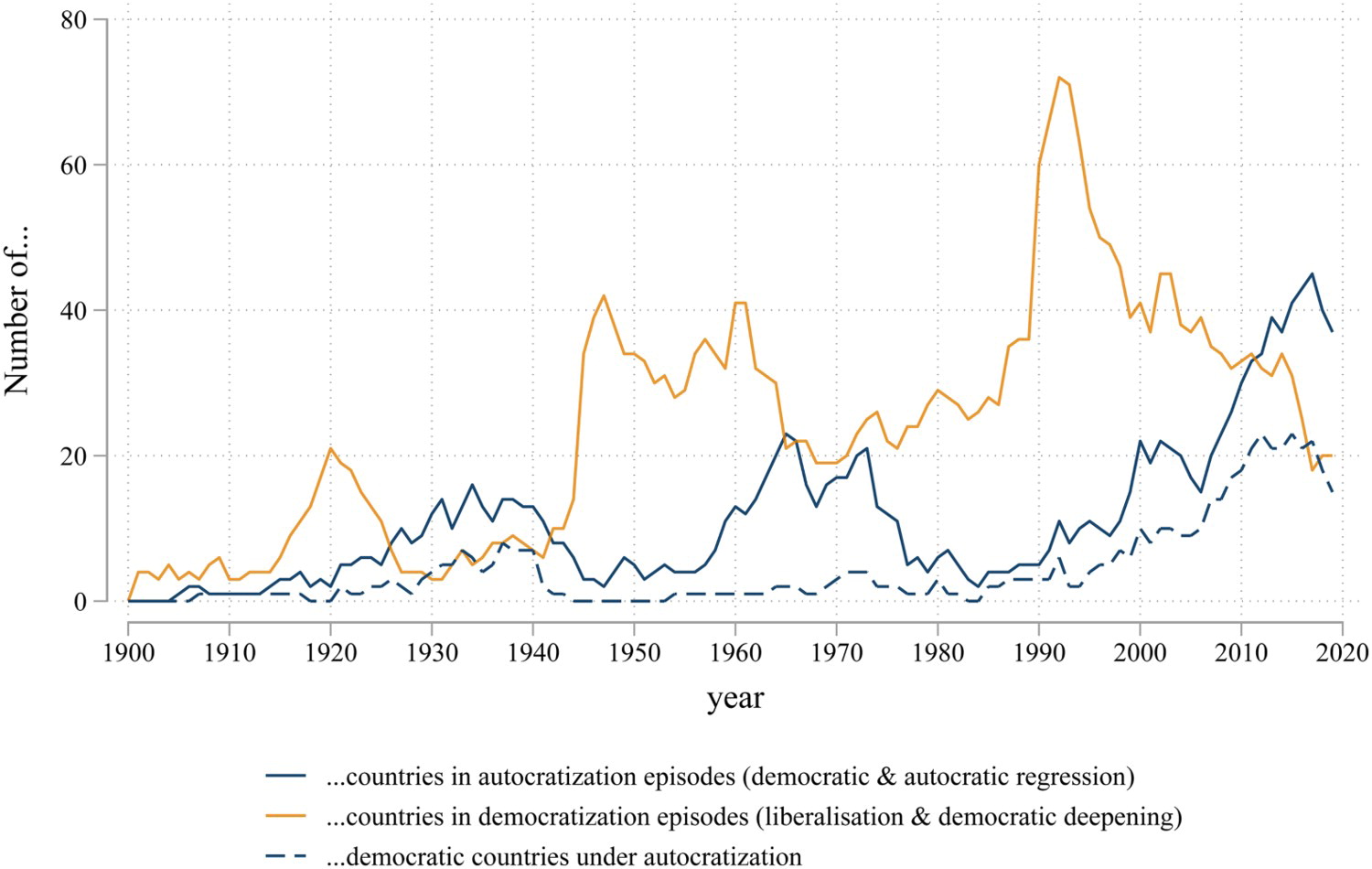
Globally, the number of democracies has fluctuated significantly. This trend indicates that while democratic transitions have been a dominant narrative since the late 20th century, the current era is marked by significant democratic backsliding. Approximately 59 countries are now classified as 'partly free,' often characterized by hybrid regimes that blend democratic and authoritarian features. The global democracy index compiled by the Economist Intelligence Unit in 2022 classified only 72 countries as full democracies, down from 90 in 2010. This data underscores the fragility of democratic gains and the prevalence of challenges in consolidating democratic transitions.
👥 Key People & Organizations
Numerous scholars, activists, and international organizations have played pivotal roles in understanding and facilitating democratic transitions. Political scientists like Guillermo O'Donnell and Philippe Schmitter were instrumental in developing theories of democratization in the 1980s. Gene Sharp, a leading scholar of nonviolent action, provided frameworks for civil resistance that have been crucial in challenging authoritarian regimes. International bodies such as the United Nations and regional organizations like the European Union often provide technical assistance, election monitoring, and diplomatic pressure to support transitions. Non-governmental organizations like Amnesty International and Human Rights Watch document abuses and advocate for democratic reforms. Prominent figures in specific transitions include Nelson Mandela in South Africa, who navigated the end of apartheid, and Václav Havel in Czechoslovakia, a dissident playwright who became president.
🌍 Cultural Impact & Influence
Democratic transitions have profoundly reshaped global culture, politics, and international relations. The spread of democratic ideals has influenced artistic expression, media narratives, and popular culture, often celebrating themes of freedom, resistance, and self-determination. The rise of democratic norms has also led to increased international cooperation through organizations like the UN and has influenced global economic policies, often favoring market economies and free trade. However, the perceived failures or complexities of transitions, such as prolonged instability or the rise of populist leaders, have also fueled skepticism and contributed to the appeal of authoritarian alternatives in some regions. The global discourse on human rights, civil liberties, and the rule of law is largely a product of these ongoing democratic movements.
⚡ Current State & Latest Developments
The current state of democratic transitions is characterized by a complex mix of progress and significant setbacks. Countries like Hungary and Poland have seen their democratic institutions weakened by illiberal governments. The rise of digital authoritarianism, where technology is used for surveillance and censorship, poses new challenges. Furthermore, geopolitical tensions, economic inequality, and the proliferation of disinformation campaigns, often amplified by platforms like Twitter and Facebook, complicate efforts to build and sustain democratic systems. The ongoing conflict in Ukraine also highlights the external pressures that can derail or reverse democratic progress.
🤔 Controversies & Debates
The process of democratic transition is inherently controversial, sparking debates on multiple fronts. A primary contention is the definition and measurement of democracy itself; scholars like Robert Putnam have explored the role of social capital in democratic consolidation, while others question whether superficial electoral reforms truly constitute democracy. The efficacy of external intervention in supporting transitions is also debated, with critics arguing it can undermine national sovereignty or lead to unintended negative consequences, as seen in the aftermath of the Iraq War. The role of economic development in democratization is another contentious issue: some argue it's a prerequisite, while others point to cases like India where democracy has flourished despite lower economic indicators. Finally, the phenomenon of 'illiberal democracy,' where elections are held but civil liberties are curtailed, raises questions about the very nature of democratic legitimacy.
🔮 Future Outlook & Predictions
The future outlook for democratic transitions remains uncertain, marked by both potential resurgence and continued decline. Some analysts predict a 'democratic recession' will persist, driven by internal fragilities and external authoritarian influences. Others foresee a potential 'democratic renewal,' spurred by youth movements, technological innovations enabling greater civic participation, and a renewed global emphasis on human rights. The effectiveness of international cooperation in supporting democratic movements and countering authoritarianism will be critical. Emerging technologies, such as blockchain for secure voting or AI for analyzing public sentiment, could offer new tools for democratic engagement, but also carry risks of misuse. The long-term trajectory will likely depend on the ability of societies to address deep-seated inequalities, combat disinformation, and strengthen institutional resilience against both internal and external pressures.
💡 Practical Applications
Democratic transitions have direct practical applications in nation-building, constitutional design, and electoral reform. International organizations like the [[national-dem
Key Facts
- Category
- movements
- Type
- topic