
Contents
- 🗺️ What Exactly *Is* a Cultural Phenomenon?
- 🧐 Vibepedia's Unique Lens: Beyond the Surface
- 💡 Key Components of a Phenomenon
- 📈 Measuring Cultural Energy: Vibe Scores Explained
- ⚖️ The Controversy Spectrum: Where Do They Land?
- 🚀 Influence Flows: Tracking Idea Propagation
- 🌐 Global Reach vs. Niche Appeal
- 📚 Essential Reading & Further Exploration
- 🛠️ How to Identify Your Own Cultural Phenomena
- ✨ The Future of Cultural Observation
- Frequently Asked Questions
- Related Topics
Overview
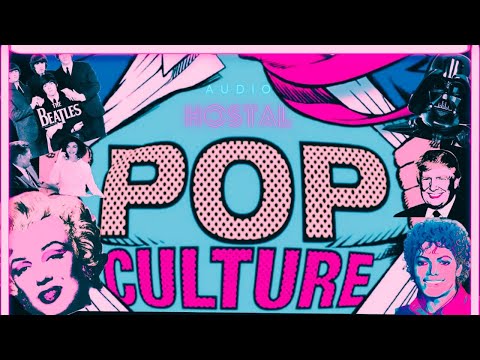
A cultural phenomenon isn't just a trend; it's a widespread occurrence that significantly impacts society, often with deep roots and far-reaching consequences. Think of the internet meme explosion, the rise of K-Pop as a global force, or the enduring fascination with true crime documentaries. These aren't fleeting fads; they represent shifts in collective consciousness, values, or behaviors. Vibepedia tracks these occurrences not just as isolated events, but as interconnected nodes within a larger cultural ecosystem. Understanding them requires looking beyond the superficial to grasp their historical context and social implications.
🧐 Vibepedia's Unique Lens: Beyond the Surface
At Vibepedia, we don't just catalog cultural phenomena; we dissect them. Our approach employs a multi-lens perspective, integrating historical context, skeptical inquiry, fan enthusiasm, technical mechanics, and future projections. We ask: Where did this phenomenon originate? What are the underlying contradictions or unspoken truths? Why does it resonate so deeply with people? How does it actually function and spread? And crucially, where is it headed, and who stands to gain or lose? This comprehensive view allows for a richer, more nuanced understanding than traditional analyses, moving beyond simple descriptions to explore the dynamic forces at play.
💡 Key Components of a Phenomenon
Every significant cultural phenomenon is built upon several key components. There's the initial spark – an idea, an event, a piece of media – that ignites interest. Then comes adoption, where a critical mass of people begin to engage with it. Diffusion follows, as the phenomenon spreads through various channels, often mutating along the way. Finally, there's impact, the measurable or observable changes the phenomenon brings to social norms, economic structures, or individual behaviors. Recognizing these stages is crucial for understanding the lifecycle and trajectory of any given phenomenon, from viral challenges to the metaverse.
📈 Measuring Cultural Energy: Vibe Scores Explained
Vibepedia quantifies cultural energy through Vibe Scores, a proprietary metric ranging from 0 to 100. This score isn't just about popularity; it reflects a phenomenon's intensity, reach, and potential for future influence. A high Vibe Score indicates widespread engagement, significant cultural impact, and a dynamic, evolving presence. Conversely, a low score might suggest a niche appeal, waning interest, or limited societal penetration. We use these scores to benchmark phenomena against each other, providing a quantifiable measure of their cultural weight, whether it's the global reach of TikTok dances or the underground influence of specific music genres.
⚖️ The Controversy Spectrum: Where Do They Land?
Cultural phenomena rarely exist in a vacuum of universal agreement. Vibepedia maps their position on the Controversy Spectrum, a scale indicating how contested or debated a phenomenon is. At one end are universally accepted concepts, while at the other are highly divisive issues or practices. For instance, the ethics of AI art generation is a highly contested area, while the widespread adoption of smartphones is largely uncontroversial today, though its initial rollout had its own debates. Understanding this spectrum helps gauge the social friction and potential for conflict surrounding a phenomenon, revealing fault lines in public opinion and cultural values.
🚀 Influence Flows: Tracking Idea Propagation
Ideas and trends don't appear out of nowhere; they propagate through Influence Flows. Vibepedia maps these pathways, identifying the key individuals, platforms, and events that act as conduits for cultural transmission. This could involve tracing how a philosophical concept from ancient Greece influenced modern existentialist literature, or how a specific internet meme format was adopted and adapted by different online communities. By understanding these flows, we can better predict how phenomena will evolve and where they might surface next, revealing the hidden connections that shape our collective understanding.
🌐 Global Reach vs. Niche Appeal
A critical distinction in cultural analysis is between global reach and niche appeal. Some phenomena, like Netflix's global streaming strategy, capture the attention of billions worldwide, transcending borders and languages. Others, such as the intricate lore of a specific video game community or the unique slang of a regional subculture, might only engage a few thousand or million individuals. However, niche phenomena can often be incubators for future mainstream trends or hold immense cultural significance for their dedicated participants. Vibepedia values both, recognizing that profound cultural shifts can originate from the most unexpected corners.
📚 Essential Reading & Further Exploration
To truly grasp cultural phenomena, engaging with primary and secondary sources is essential. Vibepedia recommends exploring foundational texts in cultural studies, such as Raymond Williams' Keywords: A Vocabulary of Culture and Society, or more contemporary analyses of digital culture. Following key cultural critics and researchers on platforms like Twitter or Substack can provide real-time insights. For specific phenomena, seeking out documentaries, academic papers, and even the primary content itself – be it music, art, or online discussions – offers the most direct understanding. Don't shy away from contrarian viewpoints that challenge popular narratives.
🛠️ How to Identify Your Own Cultural Phenomena
Identifying emerging cultural phenomena requires a blend of observation, critical thinking, and a willingness to engage with the unconventional. Start by paying attention to what captures widespread attention, even if it seems trivial at first. Ask why it's resonating: what underlying needs, anxieties, or desires does it tap into? Look for patterns of behavior, language, or aesthetics that are spreading across different platforms or communities. Engage with diverse perspectives, including those that are critical or dismissive. Vibepedia's topic intelligence tools can help you track emerging trends and their connections to broader societal shifts.
✨ The Future of Cultural Observation
The study of cultural phenomena is a dynamic, ever-evolving field. As technology advances and global interconnectedness deepens, new forms of cultural expression and dissemination will undoubtedly emerge. Vibepedia is committed to mapping this evolving landscape, anticipating the next wave of significant cultural shifts, from the impact of generative AI on creativity to the formation of new digital communities. Our goal is to provide a continuously updated, interconnected knowledge graph that helps you navigate and understand the pulse of global culture, empowering you to identify and analyze the phenomena that will shape our future.
Key Facts
- Year
- 2023
- Origin
- Vibepedia
- Category
- Cultural Studies
- Type
- Concept
Frequently Asked Questions
How does Vibepedia differentiate a cultural phenomenon from a simple trend?
A trend is often a fleeting fashion or interest, whereas a cultural phenomenon has a more profound and lasting impact on societal norms, values, or behaviors. Phenomena often have deeper historical roots and trigger more significant shifts in collective consciousness. Vibepedia analyzes the depth, duration, and systemic impact to distinguish between the two, using metrics like Vibe Scores and Controversy Spectrum analysis.
Can a cultural phenomenon be negative?
Absolutely. Cultural phenomena can be positive, negative, or neutral. For example, the rise of online misinformation is a significant negative cultural phenomenon, while the growth of global environmental activism represents a largely positive one. Vibepedia aims to provide an objective analysis of the impact and mechanics, regardless of the phenomenon's perceived valence.
How does Vibepedia gather data on cultural phenomena?
Vibepedia utilizes a multi-pronged approach, combining automated data scraping from diverse online sources (social media, news outlets, forums) with human curation and expert analysis. We track mentions, engagement metrics, sentiment analysis, and the propagation of ideas across our knowledge graph. This allows us to identify emerging trends and analyze their development in real-time.
What is the 'Controversy Spectrum'?
The Controversy Spectrum is Vibepedia's framework for measuring how debated or contested a cultural phenomenon is. It ranges from universally accepted concepts to highly divisive issues. Understanding a phenomenon's position on this spectrum helps gauge social friction, potential for conflict, and the diversity of opinions surrounding it, such as with political polarization or cancel culture.
How can I use Vibepedia to understand a specific cultural phenomenon?
You can use the Vibepedia search function to find specific phenomena like NFTs or ASMR. Each entry provides a detailed breakdown, including its history, key players, impact, Vibe Score, and position on the Controversy Spectrum. You can also explore Influence Flows to see how it connects to other topics and track emerging trends through our topic intelligence features.
Are Vibepedia's Vibe Scores subjective?
While Vibe Scores are based on proprietary algorithms that analyze quantifiable data (engagement, reach, sentiment, etc.), they also incorporate qualitative assessments from our expert analysts to capture the 'energy' and cultural resonance of a phenomenon. They are designed to be a comprehensive, albeit synthesized, measure of cultural impact, not purely subjective opinion. They aim to reflect the collective vibe, not just individual preferences.