
Contents
Overview
Communion, most widely recognized as a central sacrament in Christianity, is a ritualistic act of consuming consecrated bread and wine, symbolizing the body and blood of Jesus Christ. This practice, rooted in the Last Supper described in the New Testament, serves as a profound expression of faith, remembrance, and spiritual unity among believers. While its Christian form is most prominent, the concept of ritualistic sharing of food and drink to signify connection or covenant predates Christianity, appearing in various ancient cultures and religious traditions. The theological interpretations and practical observances of communion vary significantly across denominations, leading to ongoing debates about its meaning, efficacy, and who is permitted to partake. Its cultural resonance extends beyond religious contexts, influencing art, literature, and communal gatherings, marking it as a deeply ingrained human practice of shared experience and symbolic nourishment.
🎵 Origins & History
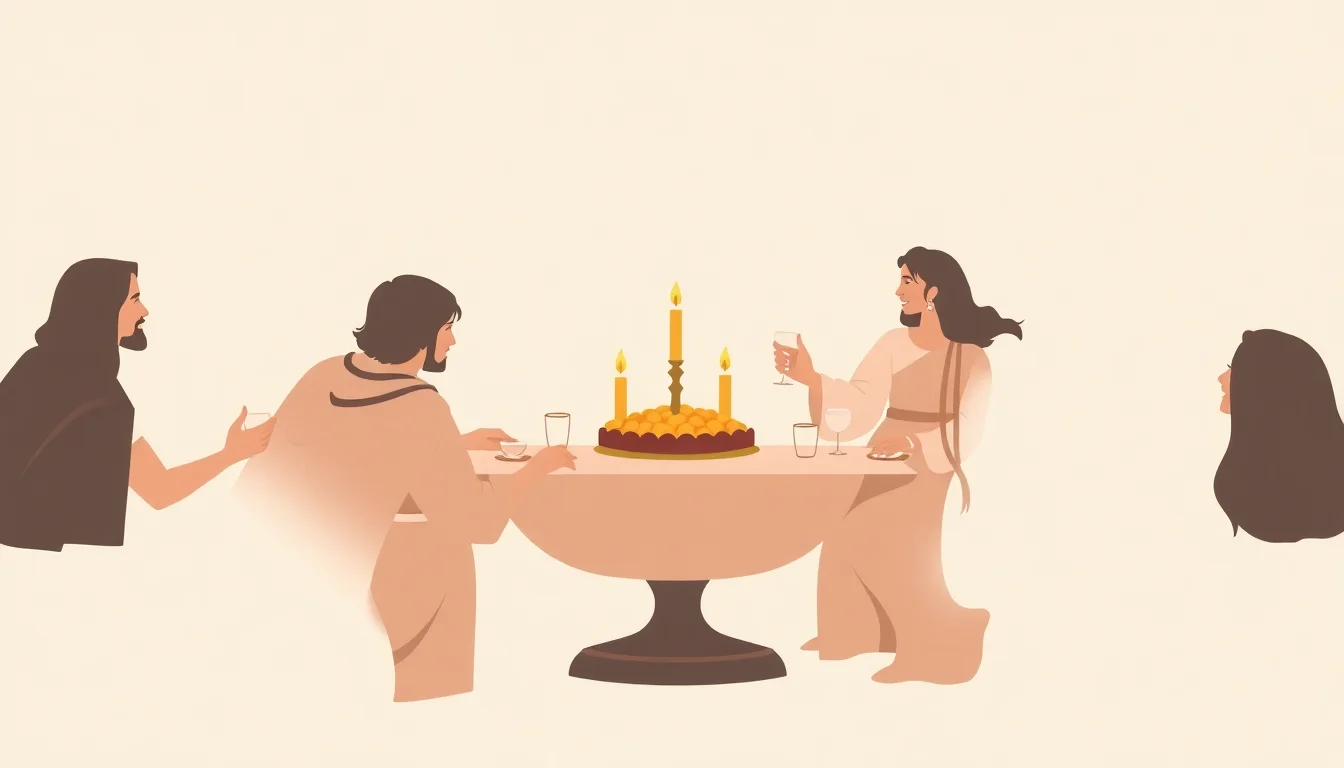
The practice of ritualistic sharing of food and drink to signify covenant or spiritual connection has ancient roots, predating Christianity by millennia. Early agricultural societies often engaged in harvest festivals and symbolic meals to honor deities and ensure fertility, a practice seen in cultures like ancient Greek mystery cults and Roman religious observances. The practice of Christian communion originates from the Last Supper, the final meal Jesus shared with his apostles before his crucifixion, as recorded in the New Testament Gospels (Matthew 26:26-28, Mark 14:22-24, Luke 22:19-20, 1 Corinthians 11:23-26). This event transformed a common meal into a sacred sacrament, a practice that became central to early Christian worship.
⚙️ How It Works
In its most common Christian form, communion involves the consecration of bread (often unleavened wafers or leavened bread) and wine (or sometimes grape juice) by a religious leader, typically a priest or minister. This consecration is believed by many to transform the elements, making them, in some theological understanding, the actual body and blood of Christ (transubstantiation, as in Catholicism and Orthodoxy), or a spiritual presence of Christ (sacramental union, as in Lutheranism), or a symbolic memorial of Christ's sacrifice (as in many Protestant denominations like Baptists and Methodists). Believers then consume these elements, often in a specific order and with accompanying prayers and scripture readings, to remember Christ's sacrifice, affirm their faith, and experience spiritual communion with God and fellow Christians. The frequency can range from weekly in some traditions to monthly or quarterly in others, with specific rules often dictating who is eligible to receive.
📊 Key Facts & Numbers
The Eucharist is celebrated daily in millions of Catholic parishes worldwide. The United Methodist Church typically celebrates communion on the first Sunday of each month. In some traditions, like the Amish, communion is observed only once or twice a year, emphasizing its solemnity and the need for thorough repentance beforehand.
👥 Key People & Organizations
Key figures in the theological development of communion include Jesus Christ, whose Last Supper initiated the rite. Apostle Paul was instrumental in articulating its theological significance in his letters, particularly in 1 Corinthians. Later theologians like Thomas Aquinas (13th century) meticulously defined transubstantiation in Catholicism, while Martin Luther proposed consubstantiation (or sacramental union) during the Protestant Reformation. John Calvin offered a spiritual presence view, distinct from both Luther and the Catholic Church. Major denominations like the Catholic Church, Eastern Orthodox Church, Anglican Communion, Lutheran World Federation, and World Methodist Council are primary organizational bodies shaping communion practices today.
🌍 Cultural Impact & Influence
Communion's influence permeates Western culture and beyond, extending far beyond the church walls. It has inspired countless works of art, from Leonardo da Vinci's "The Last Supper" to contemporary religious paintings and sculptures. In literature, themes of sacrifice, redemption, and communal gathering often echo the sacrament's symbolism, seen in works by authors like C.S. Lewis and Flannery O'Connor. The phrase "breaking bread" has become a common idiom for sharing a meal and fostering fellowship, even in secular contexts. Furthermore, the concept of a sacred meal as a marker of identity and belonging has influenced secular communal events, from national feasts to family reunions, demonstrating its deep-seated cultural resonance as a practice of shared humanity and symbolic nourishment.
⚡ Current State & Latest Developments
In contemporary Christian practice, communion remains a vibrant and evolving sacrament. Many Protestant denominations are exploring more frequent communion services and adapting practices for online or hybrid worship, a trend accelerated by the COVID-19 pandemic. For example, some churches experimented with individually sealed communion kits. Ecumenical dialogues continue to seek greater understanding and unity on Eucharistic theology, though full agreement remains elusive. The rise of interdenominational churches also presents new dynamics in how communion is understood and practiced across diverse theological backgrounds.
🤔 Controversies & Debates
The theological interpretation of communion is one of Christianity's most enduring controversies. Another significant debate concerns "closed" versus "open" communion: who is permitted to partake? Catholicism and Orthodoxy generally restrict communion to baptized members in good standing, while many Protestant churches practice "open communion," inviting all baptized Christians to participate. Concerns about the spiritual state of the recipient and the potential for "unworthy" reception leading to judgment (as warned by Paul) are also ongoing points of contention and pastoral guidance, particularly within more conservative traditions.
🔮 Future Outlook & Predictions
The future of communion may see further integration of technology and a continued push for ecumenical understanding. As digital worship becomes more normalized, denominations may develop more sophisticated ways to offer virtual communion, potentially involving mailed kits or digitally blessed elements, though this raises profound theological questions about the nature of sacramental presence. The ongoing ecumenical movement, particularly between major branches like Catholicism and Lutheranism, could lead to greater convergence in Eucharistic theology, potentially paving the way for shared communion in some contexts, though significant doctrinal hurdles remain. Furthermore, as Christianity grows in the Global South, new cultural expressions and interpretations of communion are likely to emerge, reflecting diverse local traditions and theological emphases, potentially challenging Western-centric understandings of the sacrament.
💡 Practical Applications
Communion's practical applications extend beyond its religious significance. In a secular sense, the act of "breaking bread" is a fundamental human practice for building community, fostering trust, and c
Key Facts
- Category
- culture
- Type
- topic