
Contents
Overview
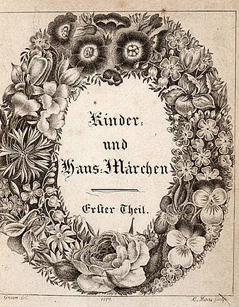
Children's and Household Tales, most famously known as Grimms' Fairy Tales, is a seminal collection of German folklore. It comprises 200 tales by the seventh edition in 1857, including iconic stories like 'Cinderella,' 'Hansel and Gretel,' and 'Little Red-Cap.' This collection, now recognized by UNESCO's Memory of the World Register, didn't just preserve oral traditions; it actively shaped them, transforming raw folk narratives into literary works that would profoundly influence Western literature and childhood perceptions of morality and fantasy for centuries. Its enduring legacy lies not only in its beloved characters and plots but also in the ongoing scholarly debate about its origins, editorial choices, and cultural impact.
🎵 Origins & History
The genesis of Children's and Household Tales lies in the Brothers Grimm's intellectual fervor during the early 19th century, a period of burgeoning German nationalism and a romantic interest in folk culture. Their primary sources were not peasants in remote villages, as often mythologized, but rather educated, middle-class acquaintances, including Dorothea Viehmann, a Huguenot woman from Hesse, and members of their own social circle. Subsequent editions saw the collection expand and undergo significant editorial revisions, particularly in response to criticism regarding the tales' perceived harshness and complexity, culminating in the definitive seventh edition of 1857, which contained 200 tales and 10 "Children's Legends."
⚙️ How It Works
The compilation of Children's and Household Tales was not a passive transcription of oral narratives but an active process of literary curation and refinement. The Brothers Grimm employed a systematic approach to collecting, often interviewing multiple storytellers to reconcile variations and then meticulously editing the collected texts. Their editorial process involved not only linguistic standardization to create a unified German literary language but also moral and thematic adjustments. Wilhelm Grimm, in particular, played a significant role in softening the more violent or sexually suggestive elements, while simultaneously enhancing the narrative flow and character development. This iterative process, spanning multiple editions from 1812 to 1857, transformed raw folk material into polished literary works, establishing conventions for the fairy tale genre that would be emulated globally.
📊 Key Facts & Numbers
By the seventh edition in 1857, the collection contained 200 tales, plus 10 "Children's Legends." The collection is recognized by UNESCO's Memory of the World Register. The collection is recognized by UNESCO's Memory of the World Register. Iconic stories include 'Cinderella,' 'Hansel and Gretel,' and 'Little Red-Cap.'
👥 Key People & Organizations
The central figures are, of course, Jacob Grimm (1785–1863) and Wilhelm Grimm (1786–1859), philologists and cultural researchers from Hanau, Germany. Their academic work extended far beyond fairy tales, encompassing foundational research in linguistics, mythology, and German legal history, including their monumental work on the Germanic verb system. Key collaborators and informants included Dorothea Viehmann, whose oral accounts were crucial for many tales, and members of the Hassenpflug family, who also contributed significantly to the collection. The publishing house Realschulbuchhandlung in Berlin was instrumental in bringing the first edition to the public in 1812.
🌍 Cultural Impact & Influence
Children's and Household Tales has exerted an immeasurable influence on global culture, particularly Western children's literature and the collective imagination. Stories like Little Red-Cap (Little Red Riding Hood), Hansel and Gretel, and Aschenputtel (Cinderella) have become archetypes, their narratives and characters deeply embedded in popular consciousness. The collection provided a blueprint for subsequent fairy tale anthologies and inspired countless literary adaptations, from Hans Christian Andersen's more literary tales to modern reinterpretations in film and literature. The Grimm brothers' work also fueled the academic study of folklore, establishing the field of folkloristics and influencing generations of scholars studying oral traditions and mythology.
⚡ Current State & Latest Developments
In the 21st century, Children's and Household Tales remains a vibrant and actively discussed body of work. Contemporary analyses continue to explore the tales through lenses of psychology, feminism, and post-colonialism, revealing new layers of meaning. Modern adaptations, such as the TV series Once Upon a Time (2011-2018) and films like Guillermo del Toro's Pan's Labyrinth (2006), demonstrate the enduring power of these narratives to be reinterpreted for new audiences. Academic interest persists, with ongoing research into the Grimm brothers' editorial practices and the historical context of their sources, often facilitated by digital archives of early editions and manuscript materials.
🤔 Controversies & Debates
The collection is not without its controversies, primarily stemming from the perceived violence and adult themes present in the original versions of many tales. Critics, both historical and contemporary, have pointed to graphic depictions of mutilation, death, and sexual undertones that seem incongruous with modern children's literature. The Brothers Grimm themselves engaged in significant self-censorship across editions, a process that has led to debates about authenticity versus sanitization. Furthermore, the romanticized notion of the Grimm brothers as simple collectors of peasant lore, rather than sophisticated literary editors drawing from educated sources, has been challenged by folklorists and historians, including scholars like Maria Tatar.
🔮 Future Outlook & Predictions
The future of Children's and Household Tales will likely see continued reinterpretation and critical re-examination. As global media landscapes evolve, expect more transmedia adaptations that blend traditional storytelling with interactive digital experiences. Academic discourse will probably delve deeper into the socio-political contexts of the tales' origins and their reception across different cultures and historical periods. There's also a growing interest in exploring the non-canonical tales and "Children's Legends" within the Grimm collection, which offer different perspectives on morality and belief. The ongoing debate about the balance between preserving the original narrative's starkness and adapting it for contemporary sensibilities will undoubtedly continue to shape how these stories are told and understood.
💡 Practical Applications
The practical applications of Children's and Household Tales are vast, primarily serving as a foundational resource for storytelling and literary education. Educators utilize the tales to teach moral lessons, critical thinking, and literary analysis in primary and secondary schools worldwide. The narratives provide rich source material for creative writing, art, and performance, inspiring countless original works. Furthermore, the psychological archetypes present in the stories, as analyzed by figures like Carl Jung, are applied in therapeutic contexts. The tales also inform the design of educational games and digital storytelling platforms, leveraging their universal appeal to engage learners.
Key Facts
- Category
- culture
- Type
- topic