
Contents
Overview
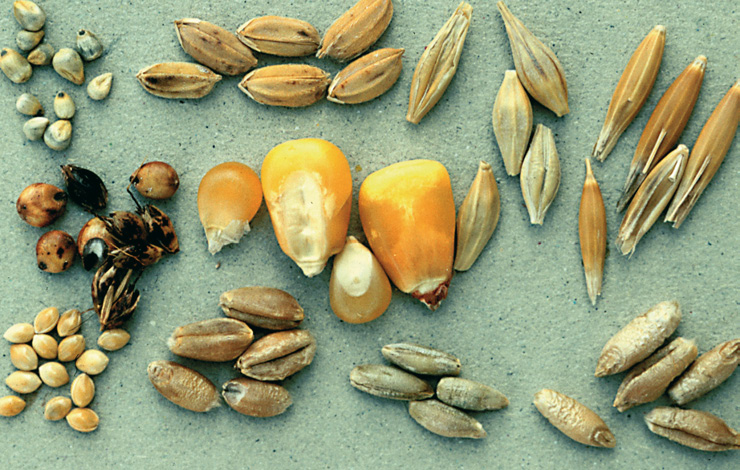
Cereals and grains, primarily grasses from the Poaceae family, represent important food crops, forming the bedrock of human sustenance for over 10,000 years. These edible seeds, including staples like wheat, rice, maize, oats, and barley, have been domesticated across diverse geographical regions, from the Fertile Crescent to East Asia. Their cultivation enabled settled agriculture, population growth, and the development of complex societies, influencing everything from economic systems to religious practices. While often grouped together, true cereals are distinct from pseudocereals like quinoa and buckwheat, though both serve similar dietary roles. Today, cereals and grains continue to dominate global food production, with annual harvests exceeding 3 billion metric tons, underscoring their enduring importance in feeding a growing planet.
🎵 Origins & History
The story of cereals and grains is inextricably linked to the dawn of human civilization, beginning with the Neolithic Revolution around 10,000 BCE. Domestication first took root in the Fertile Crescent, where wild einkorn and barley were cultivated, laying the groundwork for settled agrarian societies. Simultaneously, rice and various millets were being domesticated in East Asia, while sorghum and other millets emerged from the region of modern-day Sudan. Ceres, the Roman goddess of agriculture, lends her name to this vital food group, reflecting its profound spiritual and economic significance in ancient societies. The ability to store grains allowed for surplus, which in turn supported larger populations, specialized labor, and the rise of complex urban centers like ancient Rome and ancient China.
⚙️ How It Works
Cereals are the edible seeds of grasses belonging to the Poaceae family, characterized by their fibrous roots, hollow stems (culms), and inflorescences (ears or panicles) that bear the grains. Each grain, technically a caryopsis, consists of a protective husk, a starchy endosperm that serves as the primary food source, and a germ rich in nutrients. Most cultivated cereals are annuals, meaning they complete their life cycle within a single growing season, though some, like certain varieties of rice, can be grown as perennials. They are typically categorized by their growth habits: winter varieties are sown in autumn and harvested in spring/summer, while spring varieties are planted in spring and harvested in late summer. The milling process, from simple grinding stones to sophisticated industrial rollers, separates the bran, germ, and endosperm to produce flours, meals, and other forms of grain products.
📊 Key Facts & Numbers
Cereals and grains are the most important food crops globally, with annual production exceeding 3.1 billion metric tons (FAOSTAT, 2022). Maize leads production at over 1.2 billion tons, followed by rice at approximately 780 million tons, and wheat at around 770 million tons. These three staples alone account for over 80% of the world's cereal supply. Globally, cereal crops cover more than 70% of the world's arable land. The average per capita consumption of cereals is around 330 kg per year, with significant regional variations. For instance, rice is the primary staple for over half the world's population, particularly in Asia, while wheat is dominant in Europe, North America, and parts of the Middle East and North Africa.
👥 Key People & Organizations
Numerous individuals and organizations have shaped the cultivation and understanding of cereals and grains. Norman Borlaug, often called the 'father of the Green Revolution,' developed high-yield wheat varieties that significantly boosted global food production in the mid-20th century, earning him the Nobel Peace Prize in 1970. The Food and Agriculture Organization (FAO) plays a crucial role in monitoring global crop production, food security, and agricultural research. Institutions like the International Maize and Wheat Improvement Center (CIMMYT) and the International Rice Research Institute (IRRI) are at the forefront of developing improved crop varieties and sustainable farming practices, impacting millions of farmers worldwide. The General Mills corporation and Kellogg Company are major players in the processed cereal market, shaping consumer habits through their breakfast products.
🌍 Cultural Impact & Influence
The cultural imprint of cereals and grains is immeasurable, forming the basis of cuisines, traditions, and economies worldwide. From the unleavened breads of the Middle East to the rice-based diets of East Asia and the corn tortillas of Mesoamerica, grains are central to culinary identity. Religious ceremonies and festivals often feature grains as offerings or symbolic foods, such as the harvest festivals celebrating wheat and corn. The economic power derived from grain trade has fueled empires and driven exploration, with historical events like the Dutch East India Company's control over spice and grain routes demonstrating their geopolitical importance. The development of processed breakfast cereals in the late 19th and early 20th centuries by figures like John Harvey Kellogg and C.W. Post created a new cultural phenomenon, particularly in North America, influencing morning routines and marketing strategies.
⚡ Current State & Latest Developments
The cereal and grain sector is currently navigating a complex landscape of climate change, technological innovation, and evolving consumer demands. Extreme weather events, such as droughts and floods, are increasingly impacting yields, prompting research into climate-resilient crop varieties and advanced irrigation techniques. Precision agriculture, utilizing drones and AI-powered analytics, is being adopted to optimize planting, fertilization, and harvesting. There's a growing consumer interest in ancient grains like amaranth, quinoa, and spelt, driven by perceived health benefits and a desire for dietary diversity, challenging the dominance of staple cereals. Companies like Bayer AG and Corteva Agriscience are investing heavily in genetically modified organisms (GMOs) and gene editing technologies to enhance crop traits.
🤔 Controversies & Debates
The production and consumption of cereals and grains are not without significant controversies. The widespread use of genetically modified organisms (GMOs) in crops like maize and soybean (often grown alongside cereals) faces opposition from consumer advocacy groups and environmental organizations concerned about potential ecological impacts and corporate control over the food supply. Intensive monoculture farming practices are criticized for soil degradation, biodiversity loss, and heavy reliance on synthetic pesticides and fertilizers. Debates also persist regarding the nutritional value of highly processed grain products compared to whole grains, and the role of industrial agriculture in global food security versus supporting smallholder farmers.
🔮 Future Outlook & Predictions
The future of cereals and grains will likely be defined by adaptation and innovation in the face of environmental and societal pressures. Scientists are actively developing new crop varieties through advanced breeding techniques, including CRISPR gene editing, to enhance drought tolerance, pest resistance, and nutritional content. The expansion of vertical farming and controlled environment agriculture may offer localized cereal production, reducing reliance on traditional vast farmlands. Furthermore, the development of alternative protein sources and plant-based diets could potentially shift global demand away from traditional cereals, though their foundational role in feeding billions is unlikely to diminish entirely. The focus will increasingly be on sustainable intensification – producing more food on less land with fewer resources.
💡 Practical Applications
Cereals and grains are fundamental to a vast array of practical applications beyond direct human consumption. They are primary ingredients in the production of flour for baking bread, pasta, and pastries, and form the base for breakfast cereals, porridges, and snacks. Fermentation of grains is crucial for producing alcoholic beverages like beer (from barley) and whiskey (from maize, rye, or barley), as well as staple foods like sake (from rice). Grains are also processed into starches used in the food industry as thickeners and stabilizers, and in non-food applications such as paper manufacturing and textile production. Animal feed constitutes a significant portion of global grain production, supporting livestock industries worl
Key Facts
- Category
- culture
- Type
- topic