
Contents
Overview
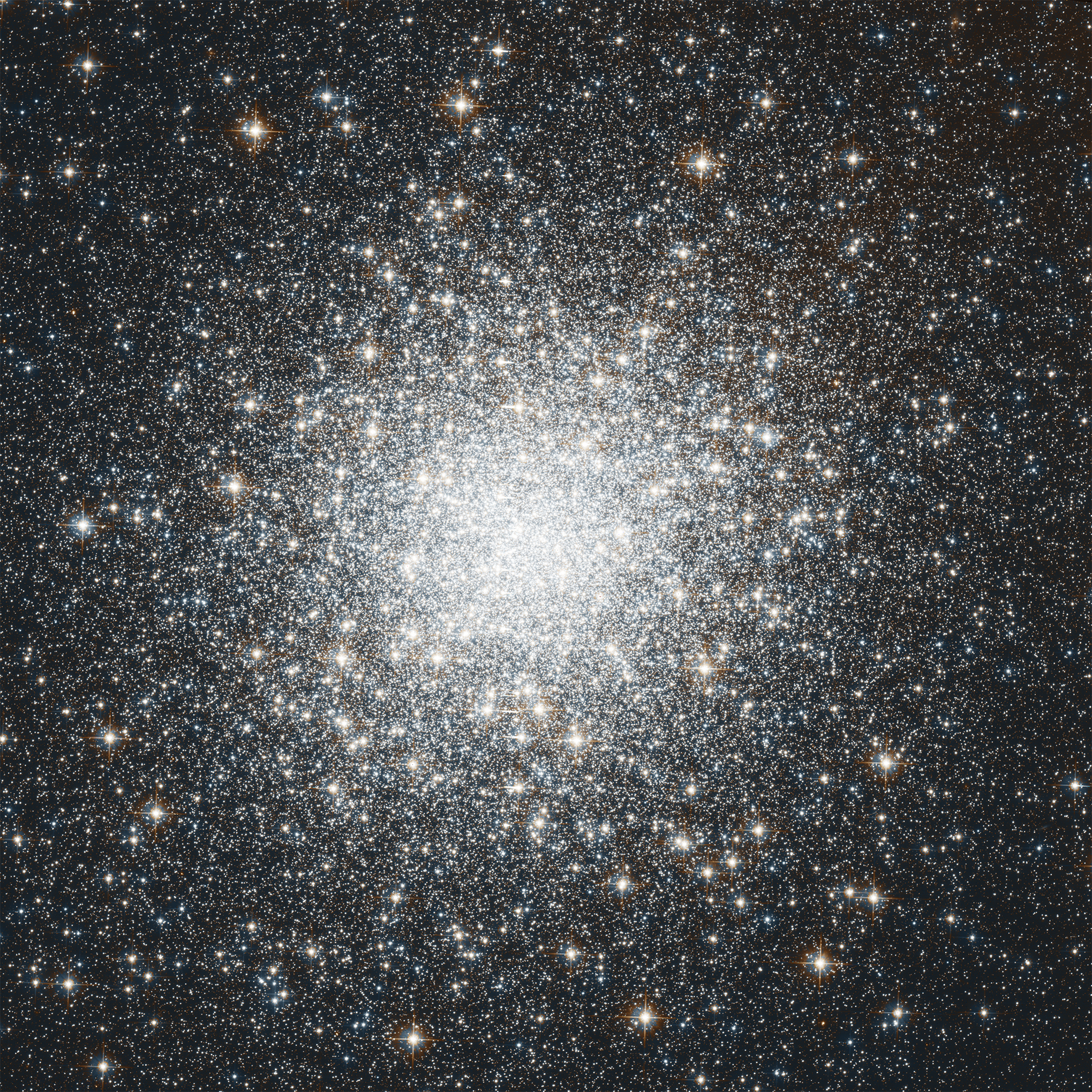
A catalog of globular clusters is a meticulously compiled astronomical database detailing these ancient, gravitationally bound collections of hundreds of thousands to millions of stars. These celestial cities, remnants from the early universe, are crucial for understanding galactic evolution, stellar populations, and the history of the cosmos. Compiling these catalogs involves extensive observational campaigns, sophisticated data analysis, and ongoing refinement as new discoveries are made. Key catalogs, such as the Hargreaves Catalog and the Palomar Observatory Sky Survey-based compilations, have provided foundational datasets. The sheer scale of these objects, with some containing over a million stars, makes them invaluable laboratories for astrophysics, offering insights into stellar dynamics, chemical enrichment, and the formation of galaxies like our own Milky Way.
🎵 Origins & History
The systematic study and cataloging of globular clusters began in earnest with the advent of powerful telescopes in the 18th century, moving beyond mere observation to classification. Early astronomers like Charles Messier included these fuzzy objects, initially cataloged as nebulae, in his seminal Messier Catalog starting in the 1770s, with M13 being a prominent example. It wasn't until the work of William Herschel in the late 18th and early 19th centuries that their true nature as dense collections of stars became widely accepted. Herschel's meticulous surveys revealed their spherical distribution and immense stellar populations. The development of photographic plates and later digital sky surveys in the 20th century enabled the creation of comprehensive, multi-wavelength catalogs, transforming our understanding of these ancient stellar systems.
⚙️ How It Works
Compiling a catalog of globular clusters is a multi-stage process rooted in observational astronomy and data science. It begins with wide-field sky surveys, such as the Palomar Observatory Sky Survey (POSS) and more modern initiatives like the Gaia mission, which capture vast swathes of the sky. Astronomers then employ algorithms to identify compact, overdense regions of stars that exhibit characteristics of globular clusters: high stellar density, spherical shape, and often a distinct color-magnitude diagram indicative of old stellar populations. Further analysis involves determining membership through radial velocity measurements and proper motions, distinguishing true clusters from chance alignments or background galaxies. Catalogs then compile this data, including coordinates, size, stellar population characteristics (like metallicity and age), and membership probabilities, often cross-referencing with other astronomical databases like the SIMBAD database.
📊 Key Facts & Numbers
The Catalogue of Nearby Galaxies with Globular Clusters identifies thousands of globular clusters in extragalactic systems. The Andromeda Galaxy alone hosts an estimated 450-500 such clusters. Charles Messier's early cataloging efforts inadvertently included many globular clusters. William Herschel's systematic surveys provided crucial evidence for their stellar nature. Robert H. Stetson developed advanced photometric techniques crucial for analyzing cluster stellar populations. The International Astronomical Union (IAU) plays a role in standardizing nomenclature and data formats. Major observatories and survey projects, such as the Palomar Observatory, Mount Wilson Observatory, and the ongoing Gaia mission by the European Space Agency, are instrumental in generating the raw data for these catalogs.
👥 Key People & Organizations
Key figures in the development of globular cluster catalogs include Charles Messier, whose early cataloging efforts inadvertently included many of these objects. William Herschel's systematic surveys provided crucial evidence for their stellar nature. More recently, astronomers like Robert H. Stetson have developed advanced photometric techniques crucial for analyzing cluster stellar populations. Organizations like the International Astronomical Union (IAU) play a role in standardizing nomenclature and data formats. Major observatories and survey projects, such as the Palomar Observatory, Mount Wilson Observatory, and the ongoing Gaia mission by the European Space Agency, are instrumental in generating the raw data for these catalogs.
🌍 Cultural Impact & Influence
Globular clusters, and by extension their catalogs, have profoundly influenced our understanding of galactic and cosmic history. Their well-defined stellar populations allow astronomers to test models of stellar evolution with high precision, influencing fields from stellar physics to cosmology. The sheer number and distribution of globular clusters in other galaxies, as documented in extragalactic catalogs, have helped confirm the universality of stellar formation processes and provided crucial data for estimating galactic masses and distances. The iconic imagery of dense, star-filled globular clusters, often featured in popular science media, has also captured the public imagination, fostering interest in astronomy.
⚡ Current State & Latest Developments
The current era of globular cluster cataloging is being significantly advanced by the Gaia mission, which is revolutionizing our understanding with unprecedented precision astrometry. Gaia's data is enabling the identification of new clusters and the precise measurement of their 3D positions and motions, leading to updated and more complete catalogs. Researchers are also increasingly using machine learning and artificial intelligence to sift through massive datasets from surveys like the Dark Energy Survey and the upcoming Vera C. Rubin Observatory. The focus is shifting towards identifying fainter, more diffuse clusters, understanding their chemical evolution, and studying their role in galactic mergers and accretion events. The SIMBAD database continues to be a central hub for cross-referencing and accessing catalog data.
🤔 Controversies & Debates
A significant debate revolves around the precise definition of a globular cluster, particularly concerning the distinction between massive globular clusters and compact dwarf spheroidal galaxies. Some objects, like Omega Centauri, exhibit complex stellar populations and internal kinematics that challenge simple classification, leading some to suggest they might be the stripped cores of dwarf galaxies accreted by the Milky Way. Another area of contention is the completeness of current catalogs; it's widely believed that many faint or distant globular clusters, especially in the outer halo or within the disks of other galaxies, remain undiscovered. The interpretation of stellar populations within clusters also sparks debate, particularly regarding the origin of multiple main sequences and the precise ages and metallicities of the oldest clusters.
🔮 Future Outlook & Predictions
The future of globular cluster cataloging points towards even greater completeness and detail, driven by next-generation telescopes and advanced data analysis techniques. The James Webb Space Telescope is providing unparalleled insights into the early formation of globular clusters in the early universe and within other galaxies. Future ground-based observatories like the Extremely Large Telescope will offer the resolution to study individual stars in clusters at greater distances. Expect catalogs to increasingly incorporate detailed chemical abundances, precise ages, and kinematic data for millions of individual stars within these clusters. The focus will likely expand to understanding the formation and evolution of globular cluster systems in the context of hierarchical galaxy formation and the role of dark matter in their dynamics.
💡 Practical Applications
Globular cluster catalogs have direct practical applications in astrophysics and cosmology. They are fundamental tools for: 1) Galactic Archaeology: Mapping the distribution and kinematics of globular clusters helps reconstruct the formation history and merger events of galaxies like the Milky Way. 2) Stellar Evolution Studies: Clusters provide coeval populations of stars, allowing for precise testing of stellar evolution models by observing how stars of different masses evolve alo
Key Facts
- Category
- science
- Type
- topic