
Contents
Overview
Brutalism's genesis can be traced to the post-war reconstruction efforts in Britain, a period demanding rapid, functional, and often monumental building solutions. Architects like Alison and Peter Smithson, who coined the term 'New Brutalism' in their 1950s writings, sought an honest expression of materials and structure, moving away from the perceived superficiality of earlier styles. The movement drew inspiration from Le Corbusier's Unité d'Habitation in Marseille, completed in 1952, which prominently featured béton brut. Architectural critic Reyner Banham further popularized the term in his 1955 essay 'The New Brutalism,' linking it to both French phrases 'béton brut' (raw concrete) and 'art brut' (raw art), emphasizing its unrefined, elemental quality. This architectural philosophy quickly spread beyond the UK, finding fertile ground in countries like the United States, Canada, and across Europe, shaping the urban fabric of the mid-20th century.
⚙️ How It Works
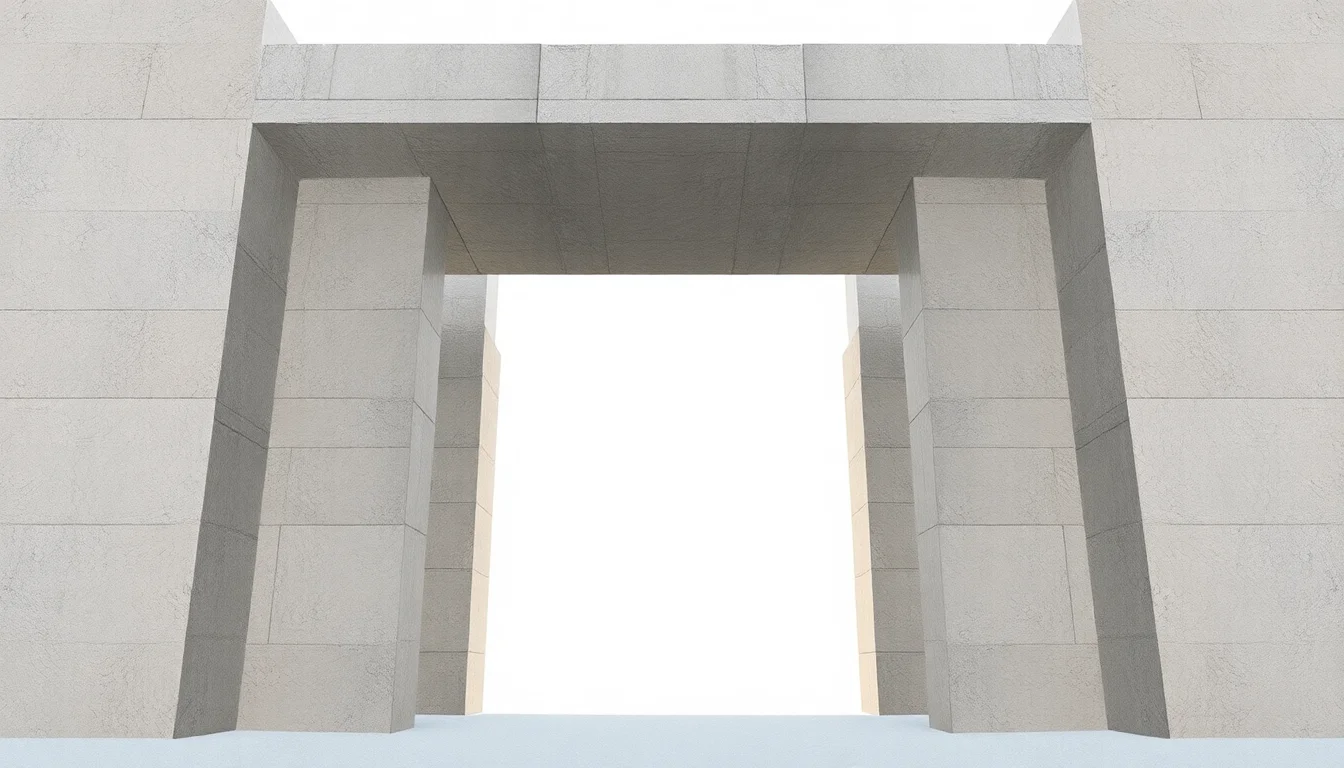
The defining characteristic of Brutalist architecture is its unapologetic display of raw building materials, most notably exposed concrete. This 'béton brut' is often left unpainted and unadorned, revealing the texture of the wooden formwork used during construction, a technique known as 'board-marked' concrete. Structural elements, such as beams, columns, and slabs, are frequently made visible, contributing to the style's imposing, often fortress-like appearance. Geometric forms are typically angular and repetitive, creating a sense of mass and solidity. While concrete dominates, other materials like brick, steel, and glass are incorporated, but always in a manner that emphasizes their inherent qualities rather than decorative application. The overall aesthetic prioritizes a direct, unmediated relationship between the building's structure, materials, and its environment.
📊 Key Facts & Numbers
Globally, an estimated 1,000 Brutalist buildings were constructed between 1950 and 1975, with the majority concentrated in the UK and North America. In the UK alone, over 600 Brutalist structures were identified in a 2015 survey by the Brutalist Website, though many face demolition. The Barbican Estate in London, completed in 1982, is one of the largest Brutalist developments, housing approximately 4,000 residents. The University of Massachusetts Dartmouth, designed by Alvar Aalto and completed in 1963, features a prominent Brutalist campus. The total cost of constructing major Brutalist civic centers, such as the Boston City Hall (completed 1968), often ran into tens of millions of dollars, reflecting the scale and ambition of these projects.
👥 Key People & Organizations
Key figures in Brutalism include the British architectural duo Alison and Peter Smithson, who championed the 'New Brutalism' concept. French architect Le Corbusier's Unité d'Habitation in Marseille served as a significant early exemplar. British architects like Denys Lasdun, responsible for the Royal National Theatre in London, and Paul Rudolph, known for his work at Yale University, were instrumental in developing and popularizing the style. The architectural critic Reyner Banham played a crucial role in defining and disseminating the movement's theoretical underpinnings. Organizations like the Brutalist Website and the Twentieth Century Society are now active in documenting and advocating for the preservation of Brutalist architecture.
🌍 Cultural Impact & Influence
Brutalism's impact on the urban landscape and cultural consciousness is undeniable, though often contentious. Its monumental scale and stark aesthetic influenced countless civic buildings, university campuses, and housing estates worldwide, aiming to provide functional, affordable spaces for growing post-war populations. The style became synonymous with governmental and institutional power, leading to its frequent portrayal in film and television as settings for dystopian futures or imposing authority, as seen in Stanley Kubrick's A Clockwork Orange (1971) which featured Brutalist architecture. While initially lauded for its perceived social equity and honesty, its association with urban decline and social issues in later decades led to a significant backlash, impacting its public perception for generations. This duality has cemented Brutalism's status as a style that evokes strong, often conflicting, emotional responses.
⚡ Current State & Latest Developments
In recent years, Brutalism has experienced a notable resurgence in appreciation, moving from a symbol of urban blight to a subject of aesthetic fascination. Online communities and social media platforms, such as Instagram accounts dedicated to Brutalist photography, have played a significant role in this revival, showcasing the style's dramatic forms and textures to a new audience. Architectural preservation efforts are increasingly focusing on Brutalist structures, with organizations like the Twentieth Century Society successfully campaigning to save endangered buildings. Despite this renewed interest, many Brutalist buildings still face demolition threats, highlighting an ongoing tension between preservationist sentiment and development pressures. The style continues to inspire contemporary architects, albeit often in more refined or context-specific applications.
🤔 Controversies & Debates
The primary controversy surrounding Brutalism centers on its aesthetic and social legacy. Critics often decry its perceived ugliness, oppressive scale, and association with social housing failures and urban decay, leading to widespread demolition campaigns throughout the late 20th and early 21st centuries. Proponents, however, defend its honesty of materials, functional integrity, and the utopian social ideals that often underpinned its creation. Debates rage over whether these buildings are eyesores or important historical artifacts deserving preservation. The cost of maintenance for exposed concrete structures, which can be susceptible to weathering and require specialized upkeep, also fuels arguments for demolition versus costly restoration. This fundamental disagreement places Brutalism at a high point on the controversy spectrum.
🔮 Future Outlook & Predictions
The future of Brutalism is likely to be a continued negotiation between preservation and redevelopment. As more Brutalist buildings reach a critical age, decisions about their fate will intensify. We can expect to see more adaptive reuse projects, where Brutalist structures are repurposed for new functions, potentially integrating modern amenities while preserving their core aesthetic. Contemporary architects may continue to draw inspiration from Brutalist principles, perhaps reinterpreting its raw materiality and bold forms in less imposing or more contextually sensitive ways. The ongoing online fascination suggests a sustained interest, potentially leading to greater public support for preservation, but the economic pressures of urban development will remain a significant challenge. The debate over whether Brutalism represents a failed utopian vision or a misunderstood architectural triumph will undoubtedly persist.
💡 Practical Applications
Brutalism's most direct application is in the design of large-scale public and institutional buildings. Examples include government offices (e.g., Boston City Hall), university campuses (e.g., UMass Dartmouth), libraries, museums, and housing projects. Its emphasis on durability and low maintenance (in theory) made it suitable for these demanding environments. Beyond architecture, the aesthetic has influenced graphic design, furniture design, and even fashion, with its bold lines and monochromatic palette reappearing in various creative fields. The raw, unpretentious nature of Brutalism has also been adopted in certain types of interior design, favoring exposed brick, concrete floors, and minimalist furnishings.
Key Facts
- Category
- aesthetics
- Type
- topic