
Contents
Overview
The study of energy in living systems, biological thermodynamics, didn't emerge as a distinct field until the mid-20th century, though its roots stretch back to the foundational work on thermodynamics by scientists like Sadi Carnot in the 1820s and James Clerk Maxwell in the 1870s. Early pioneers like Max Delbrück and Ernst Chain began applying thermodynamic concepts to biological processes in the early 1900s, particularly concerning metabolism and enzyme kinetics. The formalization of non-equilibrium thermodynamics by Ilya Prigogine in the 1950s provided a crucial theoretical framework for understanding living systems, which are inherently far from equilibrium. This allowed researchers to move beyond the static equilibrium models previously applied and to analyze the dynamic energy flows that characterize life. The development of techniques in molecular biology and biochemistry in the latter half of the 20th century provided the experimental tools to test these thermodynamic theories at the molecular level, solidifying biological thermodynamics as a vital interdisciplinary science.
⚙️ How It Works
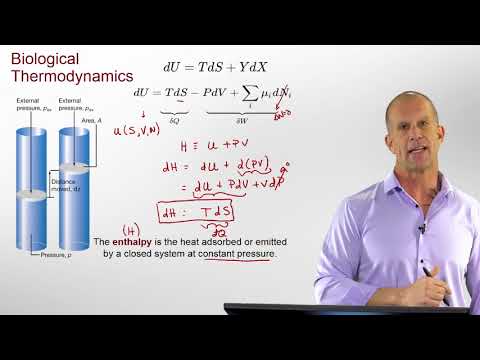
At its core, biological thermodynamics applies the first and second laws of thermodynamics to living systems. The first law, conservation of energy, dictates that energy cannot be created or destroyed, only transformed. In organisms, this means the chemical energy from food or light energy from the sun is converted into other forms, such as ATP for cellular work, heat, or mechanical energy for movement. The second law states that in any energy transformation, some energy is lost as unusable heat, increasing the entropy of the universe. Living organisms maintain their low-entropy state by continuously consuming energy and exporting entropy to their surroundings, a concept central to non-equilibrium thermodynamics. This continuous energy flux powers complex biochemical pathways, such as cellular respiration and photosynthesis, which are tightly regulated to optimize energy capture and utilization, preventing runaway reactions and maintaining cellular homeostasis.
📊 Key Facts & Numbers
Living organisms are remarkably efficient energy converters, though never perfectly so. For instance, the efficiency of ATP synthesis during cellular respiration typically hovers around 30-40%, with the remainder lost as heat. Photosynthesis in plants can convert solar energy into chemical energy with efficiencies ranging from 1% to 6% in natural conditions, though laboratory experiments have achieved higher rates. A typical human consumes approximately 2,000 kilocalories per day, a significant portion of which is used to maintain basal metabolic rate, estimated to be around 1,500 kilocalories. The energy stored in a single molecule of glucose (C6H12O6) is approximately 686 kilocalories per mole, which is then systematically released through glycolysis and the citric acid cycle. The total energy flow through Earth's biosphere is estimated to be around 130 terawatts, with solar radiation being the primary input.
👥 Key People & Organizations
Key figures in biological thermodynamics include Georges Bohn, who explored energy flow in ecosystems, and Albert Szent-Györgyi, a Nobel laureate who recognized the thermodynamic nature of biological processes. Linus Pauling, renowned for his work in chemical bonding, also contributed to understanding the energetics of biological molecules. Organizations like the American Chemical Society and the Biophysical Society host conferences and publish journals that feature cutting-edge research in this area. Major research institutions, such as Stanford University and the Max Planck Society, have dedicated departments and labs focusing on bioenergetics and thermodynamic principles in biology. The development of computational tools by researchers at MIT has also been instrumental in modeling complex biological energy systems.
🌍 Cultural Impact & Influence
The influence of biological thermodynamics extends far beyond academic journals, shaping our understanding of everything from disease to environmental sustainability. It provides the fundamental framework for understanding metabolism and the energetic basis of diseases like obesity and diabetes. In ecology, it underpins models of food webs and energy transfer through trophic levels, explaining why ecosystems can only support a limited number of predators. The concept of energy efficiency is also critical in fields like biotechnology, particularly in designing more efficient biofuels and metabolic engineering. Furthermore, it informs our understanding of life's origins and the potential for life on other planets, by defining the energetic requirements for biological systems. The public's fascination with energy, from personal health to global power, is indirectly informed by the principles of biological thermodynamics.
⚡ Current State & Latest Developments
Current research in biological thermodynamics is increasingly focused on the dynamics of living systems at the nanoscale and the energetic costs of biological information processing. Scientists are exploring the thermodynamic limits of cellular processes, such as DNA replication and protein folding, using advanced single-molecule techniques. There's a growing interest in applying machine learning to predict energy landscapes of complex biomolecules and to optimize metabolic pathways in engineered organisms. Recent studies, like those published in Nature in late 2023, are investigating the thermodynamic underpinnings of consciousness and collective behavior in biological systems. Furthermore, the development of novel nanomaterials for energy harvesting and storage is drawing heavily on principles derived from biological energy conversion, aiming to mimic the efficiency of natural processes.
🤔 Controversies & Debates
One persistent debate revolves around the precise application of the second law of thermodynamics to living organisms. While it's widely accepted that life maintains low entropy locally by increasing entropy globally, some fringe theories propose that life somehow violates or circumvents the second law. Skeptics argue that many models oversimplify the complex, coupled reactions within cells, leading to potentially misleading conclusions about energy efficiency. Another area of contention is the thermodynamic cost of biological information processing; while some argue it's fundamentally limited by thermodynamic principles, others suggest that biological systems may have evolved mechanisms to approach or even surpass theoretical minimums under certain conditions. The debate over whether life represents a truly unique thermodynamic phenomenon or simply a highly sophisticated manifestation of general physical laws continues to fuel research.
🔮 Future Outlook & Predictions
The future of biological thermodynamics promises deeper insights into the energetic basis of life and novel technological applications. Researchers anticipate a more comprehensive understanding of how energy flows govern cellular decision-making and the evolution of complex biological structures. We can expect to see the development of highly efficient bio-inspired energy harvesting devices, potentially mimicking photosynthesis with unprecedented efficacy, as explored by companies like SunPower. Advances in synthetic biology will likely leverage thermodynamic principles to design novel metabolic pathways for producing pharmaceuticals, biofuels, and sustainable materials. Furthermore, the thermodynamic analysis of aging and disease processes may lead to new therapeutic strategies aimed at optimizing cellular energy management. The integration of quantum mechanics with thermodynamics in biological contexts, a nascent field, could unlock entirely new paradigms for understanding life's energetic secrets.
💡 Practical Applications
Biological thermodynamics has profound practical applications across numerous fields. In medicine, it's fundamental to understanding drug delivery mechanism
Key Facts
- Category
- science
- Type
- topic