
Contents
Overview
The roots of the Battle of Bannockburn lie deep within the protracted struggle for Scottish sovereignty against English encroachment. Following the death of King Alexander III in 1286, England, under Edward I, began asserting dominance over the Scottish crown. Robert the Bruce was crowned King of Scots in 1306, igniting a fierce, often brutal, war of independence. By 1314, the strategic importance of Stirling Castle, a royal fortress held by the English, became the focal point. Edward II, determined to crush the Scottish rebellion, assembled a large army. Bruce, recognizing the overwhelming odds, planned his defense meticulously, choosing the battlefield near Stirling to exploit the terrain and negate the English advantage in cavalry and numbers. This strategic positioning, coupled with the unwavering resolve of the Scottish soldiers, set the stage for one of medieval Europe's most consequential battles.
⚙️ How It Works
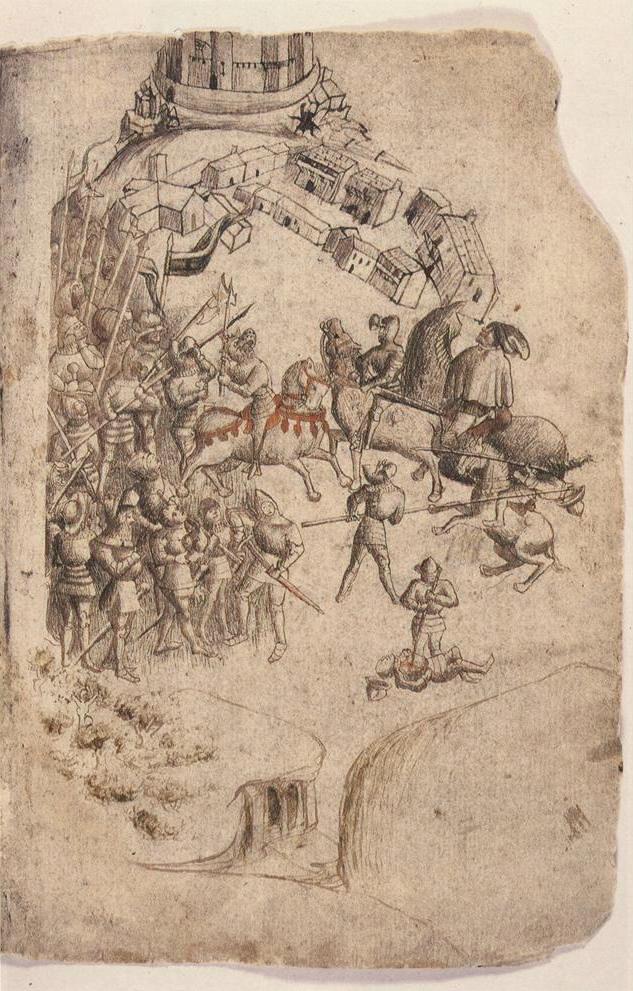
Bannockburn was a masterclass in defensive warfare and tactical innovation. Robert the Bruce deployed his forces in a narrow, marshy area between the Bannock Burn and the River Forth, effectively neutralizing the English cavalry charges that had historically dominated battlefield outcomes. He organized his infantry into schiltrons – dense, circular formations of spearmen – which proved nearly impenetrable to English knights. The Scots also employed hidden pits, sharpened stakes, and a strategic reserve force led by Edward Bruce to exploit any English disarray. The English, hampered by their own command structure, logistical issues, and underestimation of the Scottish resolve, found their vast army unable to maneuver effectively. The narrow terrain funneled them into a killing zone, where the Scottish schiltrons held firm, inflicting devastating casualties and ultimately leading to a complete rout.
📊 Key Facts & Numbers
The scale of the Battle of Bannockburn was staggering. Edward II's army is widely reported to have numbered between 20,000 and 25,000 men, including approximately 2,000 heavily armored knights and men-at-arms, a force unprecedented in its size for an invasion of Scotland. In contrast, Robert the Bruce commanded an estimated 6,000 to 10,000 Scottish soldiers, primarily infantry. The English suffered immense losses, with estimates of killed and captured ranging from 10,000 to 11,000 men, a casualty rate exceeding 40% of their total force. Scottish casualties were remarkably low, reportedly numbering only a few hundred. The financial cost to England was also immense, with the campaign representing a significant drain on the royal treasury. The victory secured an estimated 10-year period of de facto Scottish independence before formal recognition.
👥 Key People & Organizations
The central figures of Bannockburn are undoubtedly Robert the Bruce, the King of Scots, whose strategic genius and leadership were paramount, and King Edward II of England, whose tactical blunders and overconfidence led to his army's catastrophic defeat. Key Scottish commanders included Edward Bruce, Robert's brother, who led a crucial flanking maneuver, and James Stewart, a prominent Scottish noble who commanded a significant portion of the Scottish forces. On the English side, prominent figures included Aymer de Valence, Earl of Pembroke, and Henry de Bohun, who famously challenged Bruce to single combat. The Knights Templar, though disbanded by the Pope, had their lands confiscated, and some former members may have fought on either side. The siege of Stirling Castle itself was a critical element, with Sir Philip Mowbray being the English governor who surrendered the castle after the battle.
🌍 Cultural Impact & Influence
The Battle of Bannockburn's cultural impact on Scotland is immeasurable, solidifying its status as a foundational event in the national psyche. It became a potent symbol of Scottish resilience, independence, and defiance against a larger, more powerful neighbor, a narrative that continues to shape Scottish identity. The victory inspired countless ballads, poems, and historical accounts, most notably Sir Walter Scott's romanticized portrayals and the epic poem "The Brus" by John Barbour, written decades later. The battle's influence extended beyond Scotland, serving as a case study in military tactics, particularly the effectiveness of disciplined infantry against heavy cavalry, a lesson that would be revisited in later conflicts. The image of Robert the Bruce rallying his troops remains an iconic representation of national leadership and courage, a visual motif frequently employed in Scottish art and public monuments.
⚡ Current State & Latest Developments
While the battle itself concluded in 1314, its echoes continue to resonate in the 21st century. The Bannockburn Visitor Centre, opened in 2014 to mark the 700th anniversary, draws thousands of tourists annually, showcasing the battle's enduring historical significance. Modern archaeological investigations at the battlefield site, located near Stirling, continue to refine our understanding of the troop movements and the precise locations of key engagements. Debates persist among historians regarding the exact numbers of combatants and the specific tactical maneuvers, fueled by ongoing research and the interpretation of medieval chronicles. The ongoing political discourse surrounding Scottish independence often references Bannockburn as a historical precedent for national self-determination, demonstrating its continued relevance in contemporary political movements and national identity discussions.
🤔 Controversies & Debates
The primary controversy surrounding Bannockburn centers on the reliability of contemporary and near-contemporary accounts, particularly John Barbour's "The Brus," which, while a foundational text, is a heroic epic rather than a dispassionate historical record. Historians debate the exact size of both armies, the specific tactical deployment of the Scottish schiltrons, and the extent to which Bruce's victory was due to his brilliance versus Edward II's incompetence and the English army's logistical failures. Another point of contention is the precise location of the battlefield, with ongoing archaeological work seeking to definitively map the engagements. Furthermore, the narrative of Bannockburn as a purely Scottish triumph sometimes overshadows the complex political landscape of the time, including the internal divisions within Scotland and the broader European context of the Hundred Years' War that was brewing between England and France.
🔮 Future Outlook & Predictions
The future of Bannockburn as a historical site and a symbol of Scottish identity appears robust. Continued archaeological research promises to unearth further details about the battle, potentially revising existing understandings of medieval warfare. The site's ongoing development as a heritage attraction will likely ensure its prominence for future generations, serving as a tangible link to Scotland's past. In the realm of political symbolism, Bannockburn will undoubtedly continue to be invoked in discussions of Scottish sovereignty and national identity, its legacy as a victory for self-determination remaining a powerful rhetorical tool. The potential for new interpretations of the battle, perhaps through digital reconstruction or comparative military analysis, could further invigorate its study and public engagement, ensuring its relevance for centuries to come.
💡 Practical Applications
The primary practical application of studying the Battle of Bannockburn lies in understanding military strategy and leadership. Bruce's tactics—utilizing terrain to negate enemy advantages, employing disciplined formations like the schiltron, and maintaining a strategic reserve—offer timeless lessons applicable to modern military planning and even business strategy. The battle serves as a case study in how a smaller, less-equipped force can achieve victory through superior planning, discipline, and exploitation of enemy weaknesses. For historians and archaeologists, the site itself is a practical laboratory for understanding medieval battlefield dynamics, troop movements, and the material culture of the period. The visitor experience at Bannockbur
Key Facts
- Category
- history
- Type
- topic