
Contents
Overview
Anthroposophy, a spiritual philosophy birthed in the early 20th century by Rudolf Steiner, posits that a comprehensible spiritual world exists beyond our physical senses. Its adherents seek to access this realm through rigorous, disciplined thinking, aiming for a form of spiritual cognition that mirrors scientific precision. This approach emphasizes developing inner faculties to perceive spiritual realities, moving beyond purely materialist understanding. The goal is not faith-based belief, but experiential knowledge of the spiritual, accessible through conscious effort and specific meditative practices. It's a path for those who seek a deeper, more meaningful connection to existence, grounded in a structured, albeit unconventional, methodology.
👤 Who Founded It?
The architect of Anthroposophy was Rudolf Steiner (1861-1925), an Austrian philosopher, esotericist, and social reformer. Initially a scholar of Goethe, Steiner developed his own distinct spiritual science, which he termed Anthroposophy. He founded the General Anthroposophical Society in 1912 to provide a platform for his teachings and the development of Anthroposophical work. Steiner was a prolific writer and lecturer, delivering thousands of talks across Europe and North America, covering topics from cosmology and reincarnation to education and agriculture. His work continues to inspire a diverse range of practical applications, from Waldorf education to biodynamic farming.
🧠 Core Concepts & Practices
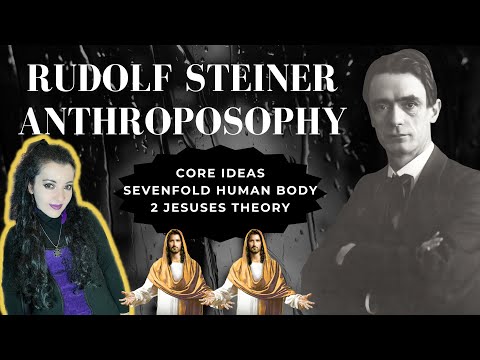
At its heart, Anthroposophy involves developing spiritual perception through practices like meditative exercises, visualization, and the study of Steiner's extensive writings. Key concepts include the four lower bodies (physical, etheric, astral, and ego), the idea of reincarnation and karma, and the existence of spiritual hierarchies. Anthroposophists believe that by purifying their thinking and cultivating specific inner capacities, they can gain direct insight into the spiritual dimensions of reality. This is not about passive reception of divine messages, but active, conscious engagement with the spiritual world, akin to scientific investigation.
🌍 Global Reach & Influence
Anthroposophy has established a significant global presence, with General Anthroposophical Society branches and affiliated initiatives in over 70 countries. Its influence is most visibly seen in the Waldorf school movement, which operates over 1,000 independent schools worldwide, and in the biodynamic agriculture movement, a precursor to modern organic farming. Anthroposophical centers also foster arts, medicine, and social therapy, demonstrating a broad application of its principles. While not a proselytizing religion, its practical manifestations have touched millions, offering alternative approaches to education, health, and sustainable living.
⚖️ Criticisms & Controversies
Anthroposophy faces considerable criticism, particularly from scientific and skeptical communities, who often label its core tenets as pseudoscience. Critics point to the lack of empirical evidence for Steiner's claims about spiritual realms and hierarchies, and question the scientific validity of concepts like etheric and astral bodies. Epistemological debates arise regarding whether Anthroposophy's claims can ever be objectively verified or falsified, given their reliance on subjective inner experience. Some also raise concerns about the hierarchical structure of the General Anthroposophical Society and the potential for dogmatism within its followers.
📚 Key Texts & Resources
The foundational texts for Anthroposophy are the vast body of Rudolf Steiner's lectures and writings. Key works include The Philosophy of Freedom (also known as The Philosophy of Spiritual Activity), which outlines his epistemological approach, and Occult Science – An Outline, which details his cosmology and understanding of spiritual evolution. For those interested in practical applications, The Education of the Child and Agriculture: A Course of Lectures offer insights into Waldorf education and biodynamic farming respectively. Many anthroposophical centers offer introductory courses and reading groups.
💡 Practical Engagement
Engaging with Anthroposophy typically begins with exploring Rudolf Steiner's foundational texts or attending introductory lectures at a local Anthroposophical Society center. Many individuals find value in experiencing Waldorf education firsthand or learning about biodynamic farming practices. For those seeking a deeper personal practice, guided meditation and contemplative exercises are often recommended. It's advisable to approach the material with an open yet critical mind, seeking to understand the methodology and its potential applications rather than accepting its claims uncritically. Many centers offer workshops and study groups for newcomers.
Key Facts
- Year
- 1913
- Origin
- Germany
- Category
- Philosophy & Spirituality
- Type
- Philosophical Movement
Frequently Asked Questions
Is Anthroposophy a religion?
Anthroposophy is generally described as a spiritual philosophy or spiritual science, rather than a religion. While it deals with spiritual realities, reincarnation, and karma, it does not have a dogma, clergy, or prescribed rituals in the way many traditional religions do. Its founder, Rudolf Steiner, envisioned it as a path of knowledge accessible to anyone, regardless of their religious background. Followers are encouraged to develop their own spiritual understanding through disciplined thinking and inner experience.
What is the difference between Anthroposophy and Theosophy?
Anthroposophy emerged from Theosophy, with Rudolf Steiner being a prominent member of the Theosophical Society before breaking away to form his own movement in 1912. While both explore esoteric and spiritual themes, Anthroposophy emphasizes a more rigorous, intellectual approach to spiritual cognition, aiming for clarity and verifiable experience, whereas Theosophy often relies more on ancient wisdom traditions and mystical insights. Steiner also focused more on the evolution of human consciousness and the development of the individual ego.
How can I learn more about Anthroposophy?
The most direct way to learn about Anthroposophy is by reading the works of Rudolf Steiner, starting with accessible introductions like The Philosophy of Freedom. Attending public lectures or study groups at a local Anthroposophical Society is also highly recommended. Many centers offer workshops on topics like Waldorf education or biodynamic farming, providing practical insights into Anthroposophical applications. Online resources and introductory courses are also widely available.
Is Anthroposophy scientifically valid?
This is a major point of contention. Proponents of Anthroposophy claim their methods lead to verifiable spiritual knowledge, akin to scientific discovery. However, critics, including many scientists and skeptics, argue that Anthroposophy's core concepts—such as etheric and astral bodies—lack empirical evidence and cannot be tested using standard scientific methodologies. Its claims are largely considered pseudoscience by mainstream scientific consensus.
What are the main practical applications of Anthroposophy?
The most well-known practical applications include Waldorf education, which emphasizes a holistic approach to learning, and biodynamic farming, a precursor to organic agriculture that focuses on soil health and cosmic influences. Other applications include Anthroposophical medicine, which integrates spiritual insights into healing, and social initiatives like Camphill communities for individuals with special needs. These applications aim to bring Anthroposophical principles into everyday life.