
Contents
Overview
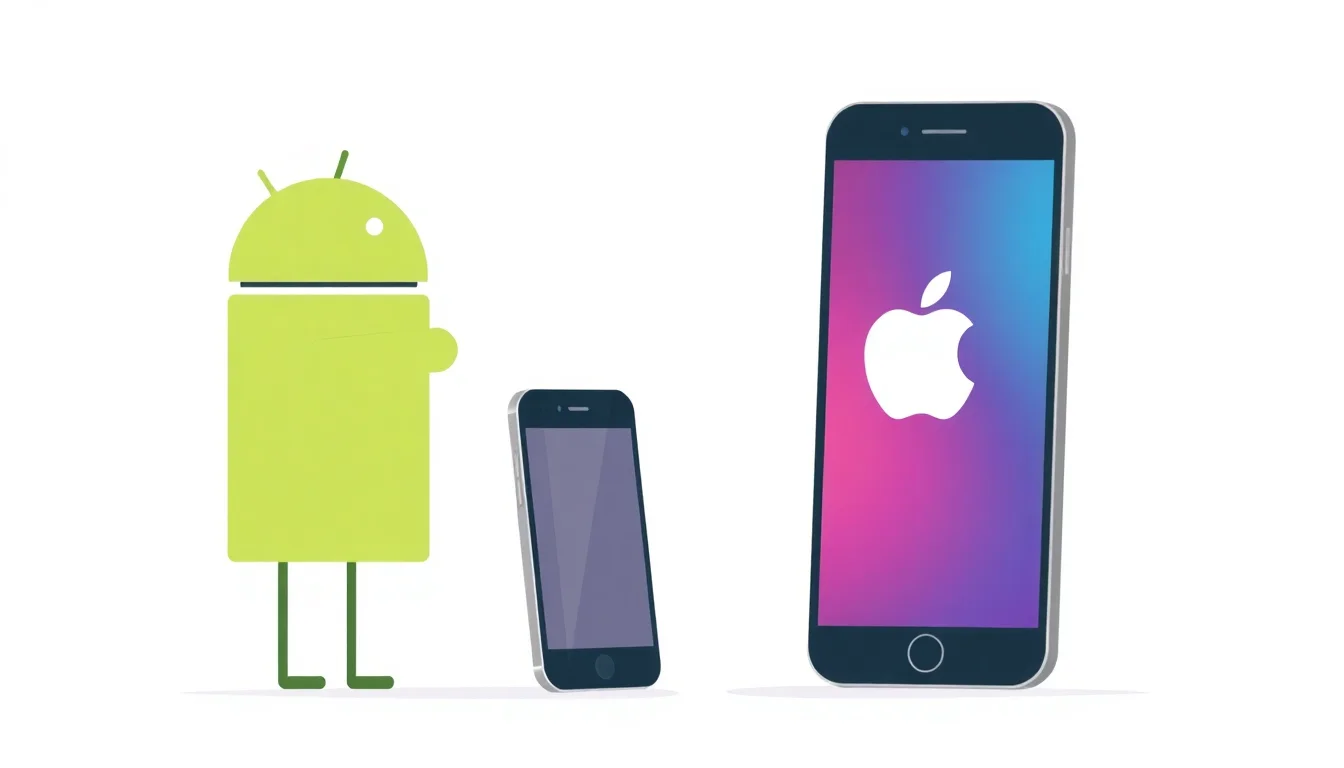
The rivalry between Google's Android and Apple's iOS is the defining technological feud of the 21st century, shaping the mobile device landscape and influencing billions of users worldwide. Launched in 2008 and 2007 respectively, these two operating systems have evolved from nascent platforms into sophisticated ecosystems, each boasting unique philosophies and market strengths. Android, an open-source Linux-based system, champions customization and hardware diversity across a vast array of manufacturers like Samsung and Google's Pixel. iOS, conversely, is a proprietary, tightly controlled system exclusive to Apple's own hardware, prioritizing user experience, security, and a curated app environment. Their ongoing competition drives innovation, dictates app development strategies, and fuels consumer choice, making their differences more than just technical specifications—they represent fundamentally different visions for personal computing.
🎵 Origins & History
The genesis of this rivalry can be traced to the dawn of the modern smartphone era. Apple ignited the revolution in January 2007 with the unveiling of the iPhone and its groundbreaking iOS (initially iPhone OS), a closed-source, intuitive interface that redefined mobile interaction. Google, already a dominant force in search and online services, responded by acquiring Android Inc. in 2005 and officially launching the Android mobile operating system in September 2008 with the HTC Dream (T-Mobile G1). While iOS aimed for a singular, premium user experience, Android embraced an open-source model, allowing numerous hardware manufacturers to adopt and customize it, leading to a rapid proliferation of devices across all price points. This fundamental difference in approach—Apple's walled garden versus Android's open field—set the stage for decades of competition and innovation.
⚙️ How It Works
At their core, both operating systems manage a device's hardware and software resources, but their architectural philosophies diverge sharply. Android is built upon the Linux kernel, offering a robust, open-source foundation (AOSP) that manufacturers can heavily modify. This allows for deep customization, from UI skins like Samsung's One UI to unique hardware integrations. Google's proprietary layer, Google Mobile Services (GMS), which includes the Google Play Store and core Google apps, is licensed to manufacturers. iOS, on the other hand, is a proprietary, Unix-like operating system developed exclusively by Apple for its iPhone, iPad, and iPod Touch devices. Its monolithic design emphasizes tight integration between hardware and software, ensuring a consistent and optimized performance across a limited range of devices. App distribution is strictly controlled through the Apple App Store, fostering a secure, albeit less flexible, ecosystem.
📊 Key Facts & Numbers
The scale of this duopoly is staggering. According to Statista, Android commands a dominant global market share, powering approximately 70% of all smartphones worldwide. iOS holds a significant, though smaller, share, typically around 28-30%, with its strength concentrated in markets like North America and Japan. Over 1.2 billion Android devices were shipped globally, compared to approximately 230 million iPhones. The Apple App Store and Google Play Store host millions of applications, with developers generating billions in revenue annually; in 2023, consumer spending on apps reached over $160 billion across both platforms. The average selling price for an iPhone in 2023 was around $980, while Android devices span a much wider range, from under $100 to over $1,500.
👥 Key People & Organizations
The architects of this digital divide are numerous, but key figures and organizations stand out. Sundar Pichai, CEO of Google and Alphabet, oversees the continued development and strategic direction of Android. Tim Cook, CEO of Apple Inc., leads the charge for iOS and the integrated Apple ecosystem. Early Android development was spearheaded by Andy Rubin, who co-founded Android Inc. before its acquisition by Google. On the Apple side, Steve Jobs was the visionary behind the iPhone and the initial iOS concept. The Open Handset Alliance, a consortium of hardware manufacturers, software developers, and mobile carriers, plays a crucial role in Android's ecosystem, while Apple maintains complete internal control over iOS development.
🌍 Cultural Impact & Influence
The Android vs. iOS battle has profoundly shaped global culture and consumer behavior. It dictates how billions interact with information, entertainment, and each other daily. The ubiquity of smartphones has led to the rise of the 'app economy,' with industries from ride-sharing (Uber) to social media (Facebook, Instagram) built entirely on these mobile platforms. Developers must choose which OS to target, influencing app availability and feature sets. Furthermore, the aesthetic and functional differences have fostered distinct user communities and brand loyalties, often leading to passionate debates about which system is 'superior.' This rivalry has also spurred innovation in areas like mobile photography, artificial intelligence assistants (Google Assistant, Siri), and augmented reality, pushing the boundaries of what personal technology can achieve.
⚡ Current State & Latest Developments
As of mid-2024, both operating systems continue their relentless evolution. Android 15 is rolling out, focusing on privacy enhancements, satellite connectivity, and improved performance. iOS 18, expected in late 2024, is rumored to heavily incorporate AI features, potentially including on-device large language models and enhanced Siri capabilities, alongside further customization options for the home screen. The hardware landscape is also dynamic, with foldable phones gaining traction on the Android side (e.g., Samsung Galaxy Z Fold series) and Apple reportedly exploring new form factors for future iPhones. The ongoing battle for market share and developer mindshare remains fierce, with both companies investing billions in R&D to maintain their competitive edge.
🤔 Controversies & Debates
The most persistent controversies revolve around openness, privacy, and market dominance. Android's open nature, while fostering choice, has led to fragmentation issues, with many devices running older, less secure versions of the OS. This also creates a more challenging environment for developers to ensure consistent app performance. Conversely, iOS's closed ecosystem, while lauded for security and user experience, faces accusations of anti-competitive practices, particularly regarding the App Store's 30% commission fee and restrictions on alternative app stores, a point of contention that has drawn scrutiny from regulators in the European Union and the United States. Debates also frequently arise over which platform offers superior battery life, camera quality, or overall user interface polish, often depending on the specific hardware models being compared.
🔮 Future Outlook & Predictions
The future of Android and iOS will likely be defined by the increasing integration of AI and the ongoing battle for developer loyalty. Expect more sophisticated AI assistants, predictive text, and personalized experiences seamlessly woven into the OS fabric. The concept of the 'smartphone' itself may continue to blur as foldable devices mature and new form factors emerge, potentially challenging the dominance of the traditional slab design. Apple may further tighten its ecosystem control, while Google could push for greater Android adoption in emerging markets and through its Pixel hardware line. The regulatory landscape will also play a significant role, potentially forcing changes in app store policies and platform openness, particularly in regions like the European Union with its Digital Markets Act.
💡 Practical Applications
The practical applications of Android and iOS permeate nearly every aspect of modern life. They are the primary interfaces for communication via calls, texts, and video chats (WhatsApp, Telegram). They serve as portable entertainment hubs for music (Spotify, Apple Music), videos (YouTube, Netflix), and games. Navigation is handled by Google Maps and Apple Maps, while mobile payments via Google Pay and Apple Pay are increasingly common. For professionals, they offer a
Key Facts
- Category
- technology
- Type
- topic