
Contents
- 🌱 What is Agricultural History?
- 🌍 Centers of Origin: Where It All Began
- ⏳ The Neolithic Revolution: A World Transformed
- 🌾 Domestication: Shaping Our Food
- 🚜 Tools & Techniques: From Digging Sticks to Tractors
- 📈 The Green Revolution: Feeding Billions
- 🔬 Modern Agriculture: Science and Scale
- ⚖️ Debates & Controversies: The Price of Progress
- 💡 Key Figures & Innovations
- 📚 Further Exploration & Resources
- Frequently Asked Questions
- Related Topics
Overview
Agricultural history is the chronicle of humanity's most fundamental transformation: the shift from nomadic foraging to settled farming. It encompasses the domestication of plants and animals, the development of tools and techniques, and the profound societal changes that followed, including the rise of civilizations, urbanization, and complex economies. This field examines the ecological impacts, the social structures that emerged around land ownership and labor, and the technological innovations that have continuously reshaped food production. From the Fertile Crescent's Neolithic Revolution to the Green Revolution's modern marvels and ongoing debates about sustainable agriculture, understanding this history is key to grasping our present and future food systems.
🌱 What is Agricultural History?
Agricultural history isn't just about dusty textbooks; it's the story of humanity's most profound relationship: our pact with the soil. It traces the journey from our earliest attempts to coax sustenance from the earth to the hyper-efficient, globally interconnected food systems of today. This field examines the domestication of plants and animals, the evolution of farming techniques, the impact of technology, and the social, economic, and environmental consequences of how we feed ourselves. Understanding this history is crucial for anyone interested in food security, environmentalism, or the very foundations of civilization.
🌍 Centers of Origin: Where It All Began
The genesis of agriculture wasn't a single event but a series of independent breakthroughs across the globe. At least eleven distinct regions, from the Fertile Crescent in the Middle East to Mesoamerica and the Yangtze River Valley in China, independently began domesticating plants and animals around 12,000 years ago. This wasn't a uniform process; different regions developed unique agricultural systems based on local flora and fauna, leading to the incredible diversity of crops and livestock we see today, from wheat and barley in the Near East to maize in the Americas and rice in Asia.
⏳ The Neolithic Revolution: A World Transformed
The advent of agriculture, often termed the Neolithic Revolution, fundamentally reshaped human existence. It marked a decisive shift from nomadic hunter-gatherer lifestyles to settled agrarian societies. This transition enabled population growth, the development of villages and cities, and the specialization of labor, laying the groundwork for complex civilizations. The ability to store surplus food also created new social structures and hierarchies, fundamentally altering the human experience and paving the way for everything from ancient civilizations to modern nation-states.
🌾 Domestication: Shaping Our Food
Domestication is the cornerstone of agricultural history, a process where humans selectively bred plants and animals over generations to enhance desirable traits. This led to dramatic changes: wild grasses like einkorn wheat transformed into the high-yield wheat we rely on, and wolf-like ancestors became the domesticated dogs and livestock we know today. This co-evolutionary dance between humans and other species has profoundly shaped both our diets and the natural world, creating a dependency that defines modern life.
🚜 Tools & Techniques: From Digging Sticks to Tractors
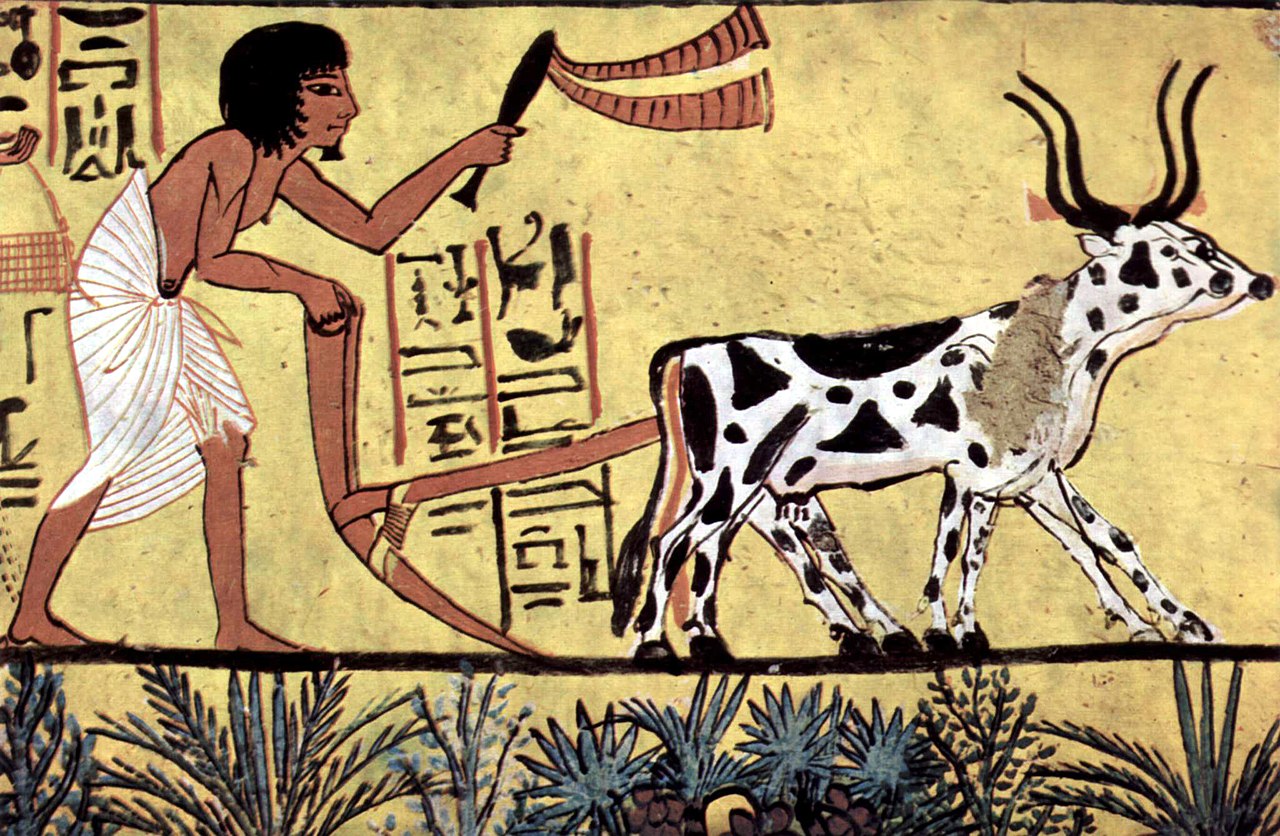
The evolution of agricultural tools and techniques mirrors human ingenuity. Early farmers relied on simple implements like digging sticks and stone axes. The invention of the plow around 4000 BCE in Mesopotamia was a monumental leap, enabling cultivation of heavier soils and increasing efficiency. Subsequent innovations, from irrigation systems and crop rotation to the mechanization of the Industrial Revolution and the advent of the tractor, have continuously amplified human capacity to produce food, albeit with significant environmental trade-offs.
📈 The Green Revolution: Feeding Billions
The Green Revolution of the mid-20th century, spearheaded by figures like Norman Borlaug, dramatically increased global food production through the development of high-yield crop varieties, synthetic fertilizers, and pesticides. While credited with averting widespread famine, particularly in Asia and Latin America, it also led to increased reliance on chemical inputs, monoculture farming, and significant environmental impacts, sparking ongoing debates about sustainability and food sovereignty.
🔬 Modern Agriculture: Science and Scale
Modern agriculture is characterized by large-scale, industrialized operations, advanced biotechnology, and global supply chains. Precision agriculture, utilizing GPS and sensors, aims to optimize resource use, while genetic modification (GM) offers new ways to enhance crop resilience and yield. However, this era also grapples with challenges like soil degradation, water scarcity, climate change impacts, and the consolidation of power within a few multinational corporations, raising questions about the future of food production.
⚖️ Debates & Controversies: The Price of Progress
The history of agriculture is rife with debate. Key controversies include the environmental costs of intensive farming versus the necessity of feeding a growing global population (projected to reach nearly 10 billion by 2050). Debates also rage over the role of genetically modified organisms (GMOs), the ethics of industrial animal agriculture, and the equitable distribution of resources and technology. The tension between maximizing yield and ensuring ecological and social sustainability remains a central challenge.
💡 Key Figures & Innovations
Key figures in agricultural history include Sumerian farmers who developed early irrigation, Jethro Tull with his seed drill in the 18th century, and George Washington Carver's work on crop rotation and soil conservation. Innovations range from the simple sickle and hoe to complex systems like hydroponics and vertical farming. The development of the Haber-Bosch process for synthetic nitrogen fertilizer in the early 20th century, though not directly agricultural, had a monumental impact on food production.
📚 Further Exploration & Resources
To truly grasp the arc of agricultural history, explore the Smithsonian National Museum of American History's agricultural exhibits, or delve into the archives of agricultural universities. Resources like the Food and Agriculture Organization of the United Nations (FAO) offer global data and policy insights. For a deeper academic dive, consult journals like Agricultural History or books such as Guns, Germs, and Steel by Jared Diamond, which explores the role of agriculture in shaping civilizations.
Key Facts
- Year
- Ongoing
- Origin
- Human Civilization
- Category
- History
- Type
- Topic
Frequently Asked Questions
When did agriculture begin?
Agriculture began independently in multiple regions around the world approximately 12,000 years ago, marking the start of the Neolithic period. This was a gradual process, not a single event, and involved the domestication of various plants and animals in different geographical locations.
What was the impact of the Neolithic Revolution?
The Neolithic Revolution led to a fundamental shift from nomadic hunter-gatherer lifestyles to settled agricultural communities. This enabled population growth, the development of villages and cities, specialization of labor, and the rise of complex societies and civilizations. It also changed human diets and our relationship with the environment.
What is the Green Revolution?
The Green Revolution refers to a period of significant increase in global agricultural production, particularly from the 1950s to the late 1960s. It involved the development of high-yield varieties of cereals, expansion of irrigation infrastructure, and the introduction of synthetic fertilizers and pesticides, credited with averting widespread famine.
How did agriculture change human society?
Agriculture allowed for the production of surplus food, which supported larger populations and led to the establishment of permanent settlements. This surplus also facilitated social stratification, the development of specialized trades beyond farming, and the emergence of governments and organized societies. It fundamentally altered the human relationship with the land.
What are the main debates in agricultural history?
Key debates include the environmental sustainability of modern intensive farming practices versus the need to feed a growing global population, the role and safety of genetically modified organisms (GMOs), the ethics of industrial animal agriculture, and the equitable distribution of agricultural resources and technology. The tension between productivity and ecological/social impact is central.
Where did agriculture originate?
Agriculture originated independently in at least eleven different regions across the globe. Major centers include the Fertile Crescent (Middle East), the Yangtze and Yellow River valleys (China), Mesoamerica, the Andes, New Guinea, and parts of Africa. Each region domesticated distinct plants and animals.