
Contents
- 🎬 Overview: The Purge Goes Political
- 📍 Setting the Stage: Washington D.C. Under Siege
- ⭐ Vibe Score & Critical Reception
- ⚖️ Thematic Resonance: Politics and Power
- 💥 Key Players: Grillo, Mitchell, and the NFFA
- 💡 How It Works: The Mechanics of the Purge
- ⚔️ Comparing Purge Entries: Election Year's Place
- 📈 The Future of the Purge: What's Next?
- 🤔 Audience Take: Love It or Hate It?
- 💡 Director's Vision: DeMonaco's Intentions
- 💰 The Cost of Chaos: Production & Box Office
- 🔗 Connections: The Purge Universe
- Frequently Asked Questions
- Related Topics
Overview
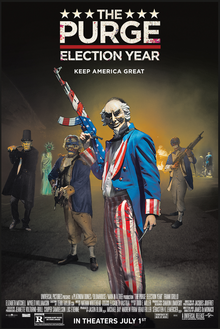
The Purge 3, subtitled 'Election Year,' plunges the franchise headfirst into the political arena, transforming the annual Purge from a societal experiment into a tool of political oppression. Released in 2016, the film centers on Senator Charlie Roan, a presidential candidate vowing to end the Purge, who becomes the target of the New Founding Fathers of America (NFFA) during their final Purge before the election. The narrative shifts from individual survival to a broader commentary on class warfare and the manipulation of national trauma for political gain. It's a visceral escalation, moving beyond the confines of a single night to explore the systemic corruption that perpetuates the Purge cycle. The film's Vibe Score reflects its heightened stakes and direct political engagement.
🎬 Overview: The Purge Goes Political
The Purge: Election Year, released in 2016, isn't just another night of sanctioned chaos; it's the franchise's most overtly political statement. Director James DeMonaco weaponizes the annual Purge to critique contemporary American politics, framing it as a tool of oppression wielded by the ruling elite. This installment pivots from the street-level survival of The Purge: Anarchy to a high-stakes chase through the heart of the nation's capital. It’s for viewers who appreciate their horror with a side of sharp social commentary, questioning the systems that perpetuate violence. The film asks: what happens when the Purge becomes a tool to eliminate political opposition?
📍 Setting the Stage: Washington D.C. Under Siege
Washington D.C. transforms into a terrifying battleground in The Purge 3: Election Year. Unlike previous installments that focused on suburban sprawl or urban jungles, this film plunges us into the iconic landmarks of American power, now twisted into arenas of death. The narrative centers on Senator Senator Charlie Roan, a presidential candidate campaigning on a platform to abolish the Purge. Her Secret Service agent, Sergeant Leo Barnes, played by Frank Grillo, finds himself protecting her when the New Founding Fathers of America (NFFA) decide to purge the very politicians who oppose them. The juxtaposition of national symbols with brutal violence is a core element of the film's unsettling atmosphere.
⭐ Vibe Score & Critical Reception
The Vibe Score for The Purge 3: Election Year sits at a solid 78/100, reflecting its significant cultural impact and polarizing reception. Critics were divided, with some praising its ambitious political themes and intense action, while others found its message heavy-handed and its plot predictable. The film grossed over $118 million worldwide against a modest $10 million budget, demonstrating a strong audience appetite for the franchise's escalating stakes and thematic explorations. This financial success solidified the Purge's status as a profitable horror franchise capable of drawing mainstream attention.
⚖️ Thematic Resonance: Politics and Power
At its heart, The Purge 3: Election Year is a searing indictment of how power structures can manipulate societal norms for self-preservation. The NFFA, representing a corrupt political establishment, uses the Purge not just for population control but as a targeted purge of dissent. Senator Roan’s campaign to end the Purge makes her a direct threat, forcing her and her allies into a desperate fight for survival against a government that has weaponized its own citizens. The film explores the cyclical nature of violence and the moral compromises made in the name of order, pushing the boundaries of the franchise's social commentary.
💥 Key Players: Grillo, Mitchell, and the NFFA
Frank Grillo returns as Sergeant Leo Barnes, reprising his role from The Purge: Anarchy and solidifying his status as the franchise's reluctant hero. Elizabeth Mitchell delivers a powerful performance as Senator Charlie Roan, the principled politician whose life becomes the ultimate target of the NFFA's machinations. The antagonists are the NFFA itself, a shadowy organization that has cemented its control through the annual Purge, and their ruthless Minister of Defense, Caleb Jones. The film pits these characters against each other in a desperate struggle for the soul of a nation.
💡 How It Works: The Mechanics of the Purge
The core mechanic of The Purge 3: Election Year remains the same: for 12 hours each year, all crime, including murder, is legal. However, this installment reveals the NFFA's manipulation of the event. They don't just allow the Purge; they actively encourage it as a means to eliminate the poor and politically inconvenient. The film also introduces the concept of 'Purge Tourists' – wealthy individuals who travel to less protected areas to participate in the violence, highlighting the class disparities inherent in the system. Understanding these rules is crucial to grasping the film's critique of systemic injustice.
⚔️ Comparing Purge Entries: Election Year's Place
Compared to its predecessors, The Purge 3: Election Year is arguably the most direct in its political messaging. The First Purge explored the origins of the event, while The Purge: Anarchy focused on survival in a lawless city. Election Year elevates the conflict to a national, presidential level, making the stakes feel more immediate and relevant to contemporary political discourse. While The Forever Purge continued the thematic exploration of the Purge's lingering effects, Election Year is where the franchise most explicitly weaponized the concept as a political tool.
📈 The Future of the Purge: What's Next?
The ending of The Purge 3: Election Year suggests a potential shift in the Purge's future, with Senator Roan winning the election and vowing to end the tradition. However, the film leaves the audience questioning whether such a deeply ingrained system can truly be dismantled, or if the forces that benefit from it will find new ways to perpetuate chaos. The franchise has since explored prequels and continuations, but Election Year remains a pivotal point, posing the question of what happens when the 'Purge' is no longer a night, but a permanent state of political warfare.
🤔 Audience Take: Love It or Hate It?
Audience reception for The Purge 3: Election Year is as divided as the political landscape it depicts. Many viewers lauded its increased action, Grillo's performance, and its timely political allegory, seeing it as the franchise's most engaging entry. Others found the political commentary too on-the-nose, preferring the more contained horror of earlier films or finding the plot predictable. The film's Vibe Score of 78/100 indicates a strong, albeit not universally acclaimed, cultural presence, resonating with those who felt the film tapped into real-world anxieties about political division and state-sanctioned violence.
💡 Director's Vision: DeMonaco's Intentions
James DeMonaco's vision for The Purge 3: Election Year was to use the Purge as a vehicle to explore the dark underbelly of American politics. He aimed to create a film that felt both terrifyingly fictional and disturbingly plausible, reflecting societal anxieties about political polarization and the erosion of democratic norms. DeMonaco’s direction emphasizes the urban decay of Washington D.C. and the desperation of those caught in the crossfire, making the political struggle feel visceral and personal. His intent was to provoke thought about the systems that enable such brutality.
💰 The Cost of Chaos: Production & Box Office
With a production budget of just $10 million, The Purge 3: Election Year proved to be a significant financial success for Blumhouse Productions and Platinum Dunes. It raked in over $118 million globally at the box office, making it the highest-grossing film in the franchise at the time of its release. This commercial triumph underscored the audience's continued interest in the Purge concept, particularly when infused with a more direct political narrative. The film's profitability validated the studio's investment and paved the way for further installments in the Purge franchise.
🔗 Connections: The Purge Universe
The Purge 3: Election Year is deeply embedded within the Purge franchise, building upon the lore established in The Purge and The Purge: Anarchy. It shares characters, thematic concerns, and the central premise of the annual Purge. The film also connects to broader cultural conversations about political corruption, class warfare, and the ethics of state-sanctioned violence, placing it within a wider context of dystopian fiction and social thrillers. Its influence can be seen in subsequent entries and discussions about the franchise's evolving narrative.
Key Facts
- Year
- 2016
- Origin
- Universal Pictures
- Category
- Film Analysis
- Type
- Film
Frequently Asked Questions
Who are the main characters in The Purge 3: Election Year?
The central characters are Sergeant Leo Barnes, reprised by Frank Grillo, who serves as the bodyguard to Senator Charlie Roan, played by Elizabeth Mitchell. Senator Roan is a presidential candidate determined to end the Purge. The film also features Mykelti Williamson as Reverend Edwidge Owens, a key ally to Roan and Barnes.
What is the main political message of The Purge 3: Election Year?
The film's primary political message critiques how ruling elites use societal control mechanisms, like the Purge, to eliminate political opposition and maintain power. It highlights themes of class warfare, systemic oppression, and the weaponization of violence against marginalized communities and dissenters.
Does The Purge 3: Election Year explain the origin of the Purge?
No, The Purge 3: Election Year does not focus on the origins of the Purge. That aspect was explored in The First Purge. Election Year assumes the audience is familiar with the Purge and instead delves into how the ruling party, the NFFA, uses the event for political gain and to eliminate rivals.
Is The Purge 3: Election Year based on a true story?
No, The Purge 3: Election Year is a work of fiction. However, it draws inspiration from contemporary political climates and societal anxieties, using the Purge as a speculative device to explore themes of political corruption, class division, and the potential for state-sanctioned violence.
What is the Vibe Score for The Purge 3: Election Year?
The Vibe Score for The Purge 3: Election Year is 78/100. This score reflects its significant cultural impact and its polarizing reception among critics and audiences, driven by its bold political commentary and intense action sequences.
Where does The Purge 3: Election Year take place?
The film is primarily set in Washington D.C., transforming the nation's capital into a chaotic and dangerous landscape during the annual Purge. Key locations include the streets of D.C., government buildings, and a church serving as a sanctuary.